
5 Chicken Feeder Ideas to Reduce Feed Waste, Mess & Daily Work
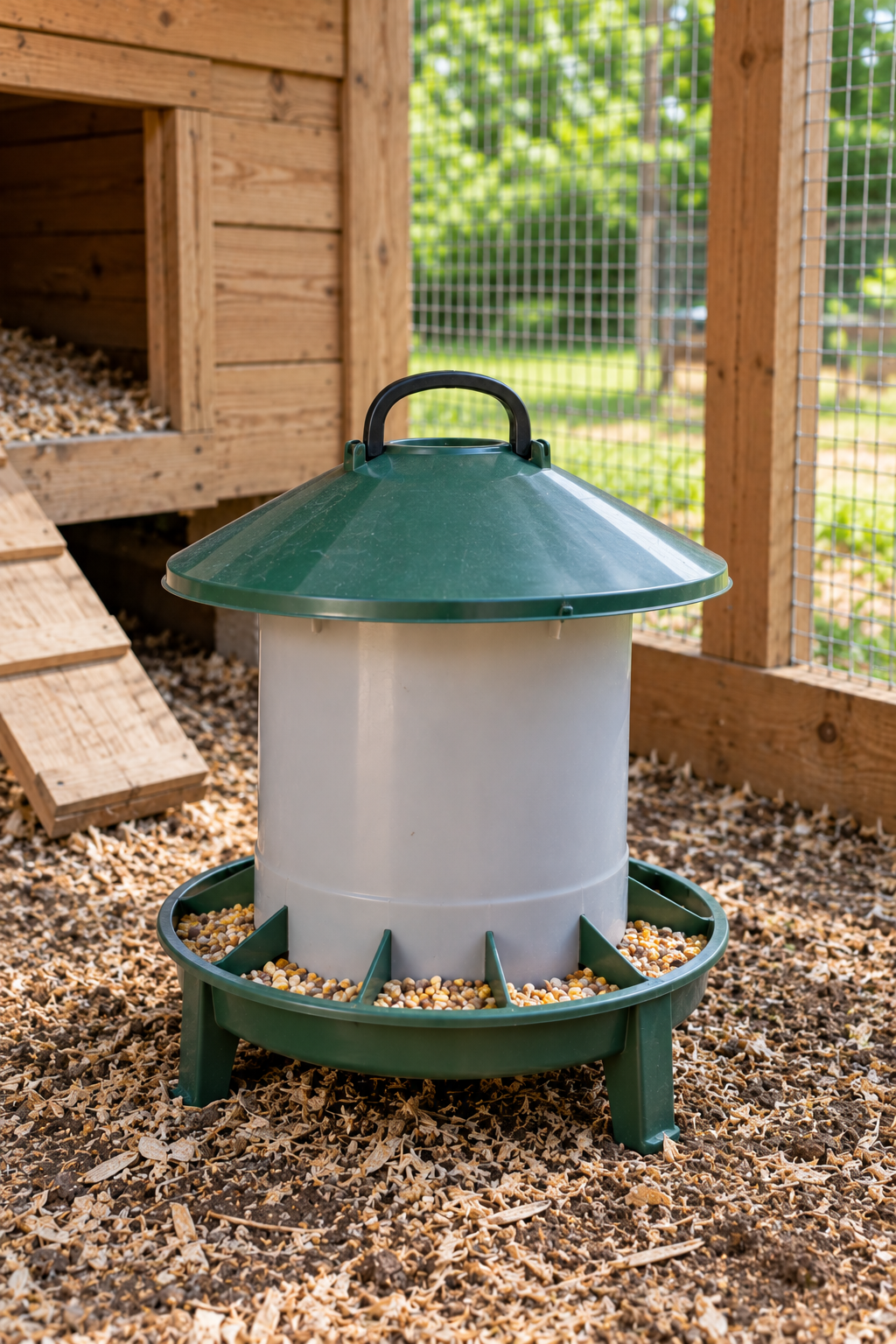
Choosing the right feeder can make a surprisingly big difference when you’re raising chickens. The best chicken feeder ideas aren’t simply about finding a container that holds feed—they’re about keeping food clean and dry, reducing waste, making feeding easier, and giving every chicken comfortable access to its food.
Chickens naturally scratch, peck, and toss feed while eating, so an open container placed directly on the ground can quickly become messy. Feed can also become contaminated with bedding or droppings, while spilled food may attract unwanted pests.
Fortunately, you don’t need an expensive setup to improve your feeding area. A properly positioned hanging feeder, PVC feeder, covered trough, bucket feeder or even a simple DIY design can make everyday chicken care much easier.
In this guide, we’ll look at 5 practical chicken feeder ideas that you can build, buy, or adapt for your own backyard flock. Each option includes how it works, who it’s best for, how to set it up, and what to consider before choosing it.
What Makes a Good Chicken Feeder?
Before choosing between different chicken feeder ideas, think about what you actually want your feeder to accomplish.
A good feeder should:
- Keep feed reasonably clean and dry
- Minimize unnecessary spillage
- Be stable and difficult to tip over
- Give chickens comfortable access
- Be easy to refill
- Be easy to clean
- Provide enough feeding space for the flock
- Keep feed away from unnecessary moisture and contamination
Feeder height is particularly important. Extension guidance recommends positioning feeders so birds can access them comfortably while reducing the amount of litter they can scratch into the feed. The University of Minnesota also notes that hanging feeders can reduce contamination from manure and bedding while their curved design can reduce spillage.
1. Hanging Chicken Feeder
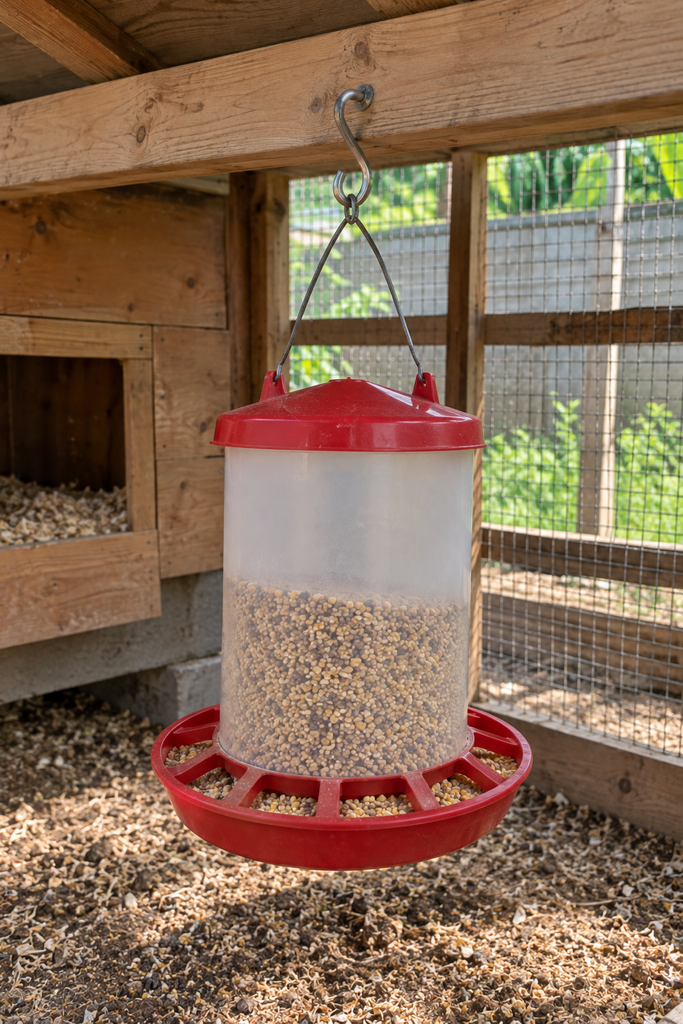
A hanging feeder is one of the easiest upgrades for a backyard flock.
Instead of placing the feeder directly on the ground, you suspend it from a hook, chain, or suitable support. The feeder should be positioned at a comfortable height for the chickens while remaining stable enough that they can’t swing it around or knock it over.
Why a Hanging Feeder Works
Ground-level feeders are exposed to everything happening on the floor of the coop or run.
Chickens scratch bedding backward while they eat, walk around the feeder, and may even step into an open container. A raised feeder can help separate the feed from much of that activity. It also makes it more difficult for chickens to sit inside the feeder.
The University of Minnesota’s poultry feeder guidance specifically describes hanging feeders as useful for reducing manure and bedding contamination.
How to Set Up a Hanging Feeder
Choose a sturdy location where the feeder won’t block a doorway, nesting box, or major walkway.
Attach it securely and adjust the height as your chickens grow.
You don’t want it so low that chickens can easily scratch bedding into it, but you also don’t want it so high that smaller birds struggle to reach the feed.
A practical approach is to observe your flock after installation.
If chickens are comfortably eating without stretching excessively or climbing onto the feeder, you’re on the right track.
Another Important Tip
Don’t fill the feeder completely to the top just because it has the capacity.
A deeper pile of feed gives chickens more opportunity to rake feed outward with their beaks. FAO guidance recommends limiting feed depth and using a feeder with a lip that helps prevent birds from pushing feed onto the floor.
Best For
Best for: Small to medium backyard flocks that want a simple, cleaner feeding setup.
2. PVC Pipe Chicken Feeder
If you enjoy DIY projects, a PVC pipe feeder can be one of the most interesting chicken feeder ideas to try.
The basic concept uses PVC pipe as a vertical or horizontal feed reservoir, with openings positioned where chickens can access the feed.
The pipe stores additional feed while the chickens eat from the openings.
Why Use PVC?
PVC is relatively inexpensive, lightweight, and easy to work with.
You can customize the length and opening arrangement according to the size of your flock.
The University of Minnesota Extension actually provides a DIY poultry feeder design using PVC pipe. Their design uses different pipe diameters depending on bird age and can be suspended to reduce contamination.
Simple DIY Concept
A basic version can use:
- PVC pipe
- End caps
- Appropriate feeder openings
- Mounting brackets
- Screws or suitable fasteners
For larger chickens, a wider pipe can provide more room for feed to flow. The pipe should be securely mounted so chickens can’t pull it away from the wall.
Where Should the Opening Go?
The feeding opening should be positioned so chickens can comfortably reach the feed without being able to climb inside.
This is one of the most important parts of a PVC design.
You don’t want an opening that’s so large that chickens can enter the pipe, but it also shouldn’t be so small that feed becomes difficult to access.
Keep It Dry
PVC feeders work best when protected from rain.
If the feeder is outside, position it under a covered portion of the chicken run or add a suitable weather shield.
Wet feed can spoil quickly, especially in warm conditions. University of Minnesota poultry guidance also emphasizes keeping feed protected from moisture.
Best For
Best for: DIY chicken keepers, organized coops, and people who want a feeder that can hold more feed.
3. Covered Chicken Feeder
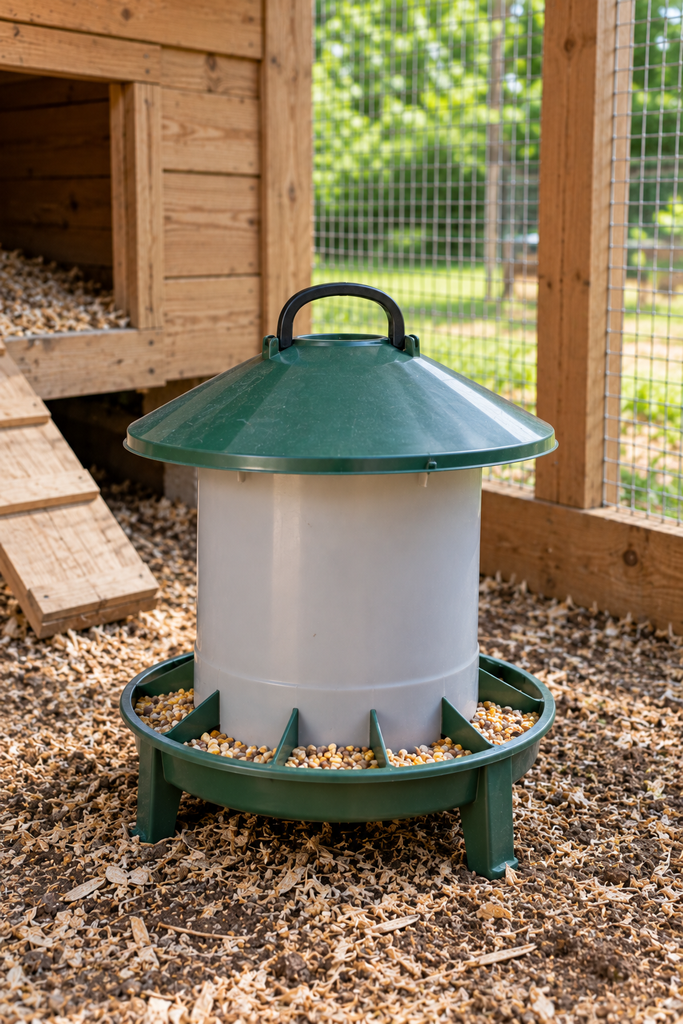
A covered feeder is a great option if your chickens eat in an outdoor run. The biggest problem with an outdoor feeder isn’t necessarily the feeder itself—it’s the weather.
Rain can get into exposed feed, while wet ground can make the area around the feeder muddy. A covered feeder creates a protected feeding area.
Why a Covered Feeder Helps
Feed that becomes wet can spoil and become unpleasant or unsafe for chickens to consume.
A roof or cover also helps keep falling leaves, debris, and some environmental contamination away from the food.
The University of Minnesota recommends using a feeder with protection from rain as part of a low-waste setup.
You Don’t Need a Complicated Structure
You could place a normal feeder beneath:
- A small roof
- Covered run
- Coop overhang
- Weather-resistant shelter
- DIY feeder station
The important thing is that rain shouldn’t blow directly into the feed.
Create a Dedicated Feeding Station
For an even better setup, create a small feeding zone. For example:
Roof → Feeder → Dry floor → Open walking area
This keeps feeding activity concentrated in one location.
You can use a solid surface underneath the feeder rather than placing it directly over wet soil.
Avoid Placing It Near the Coop Door
If possible, don’t put the feeder directly beside the entrance.
Chickens move constantly through the door, and bedding can be carried into the feeding area.
You also don’t want the feeder blocking the main path.
Best For
Best for: Outdoor chicken runs, rainy climates and anyone who struggles with wet feed.
4. Trough Chicken Feeder
A trough feeder is one of the simplest solutions for allowing several chickens to eat at the same time.
Instead of one small circular feeding point, a trough provides a longer feeding edge.
This can be especially useful if you have a flock where several chickens tend to eat simultaneously.
Why Choose a Trough?
One of the biggest advantages is accessibility. Several chickens can approach the feeder from different positions instead of waiting for one feeding opening.
Adequate feeder space is important because insufficient access can allow dominant birds to crowd out lower-ranking chickens. Extension guidance emphasizes providing enough feeder space for the flock.
Position the Trough Correctly
Don’t simply put a long trough on the ground. Raise it to an appropriate height for your flock.
The feeder should be comfortable for chickens to reach while making it harder for them to scratch litter into the food. A stable stand can work well.
You can also suspend some trough-style feeders if the design allows it.
Add a Feed Guard
An open trough makes it easy for chickens to flick feed outward. A lip, grill or other appropriate guard can help reduce this behavior.
FAO guidance specifically recommends feeders with a lip designed to prevent birds from pushing feed onto the floor.
Don’t Overfill It
More feed in the trough doesn’t necessarily mean better feeding. Keeping a more controlled amount of feed in the feeder can reduce the amount chickens push out while also making it easier to identify when the feeder needs cleaning.
Best For
Best for: Medium or larger backyard flocks and chickens that need more feeding access.
5. Automatic or Treadle Chicken Feeder
If you’re looking for a more advanced feeding solution, an automatic or treadle feeder can be worth considering.
A treadle feeder generally uses a platform that chickens step on to access the food compartment.
The idea is to keep the feed protected when chickens aren’t actively eating.
Why Consider an Automatic Feeder?
For some backyard chicken keepers, the biggest problem isn’t simply feed waste. It’s exposed feed. Open feed can attract rodents and other unwanted animals.
A protected feeder can reduce the amount of food that’s freely available around the coop.
This can be particularly useful if you don’t want to refill a small feeder multiple times every day.
How a Treadle Feeder Works
The chicken steps onto the treadle. Its weight activates the mechanism. The feeding area opens. The chicken eats. When the chicken steps away, the feeding area closes again.
Not every chicken immediately understands how to use a treadle feeder, so introduce it gradually and observe the flock.
Important Consideration
Don’t assume that an automatic feeder eliminates the need for maintenance.
You still need to:
- Check the mechanism
- Clean the feeder
- Inspect for moisture
- Make sure all chickens can access feed
- Monitor whether smaller or timid birds are using it
The goal is convenience, not completely hands-off chicken care.
Best For
Best for: Busy chicken keepers, larger flocks, and people dealing with exposed feed or pest problems.

Chicken Feeder for Backyard Chickens
A good chicken feeder keeps feed accessible while helping reduce spills, mess, and contamination inside the coop. Choose a feeder based on your flock size, available space, and whether you need extra protection from rain, rodents, or wild birds.
-
🌾
Helps Reduce Feed Waste Covered, port-style, hanging, and treadle feeders can help limit the amount of feed chickens scratch or bill onto the ground.
-
🧼
Keeps Feed Cleaner Raised or covered designs can help keep bedding, droppings, and other debris away from the feed.
-
🐀
Options for Pest Control If rodents are a problem, look for enclosed or treadle-style feeders designed to limit access when chickens aren’t feeding.
-
📦
Choose the Right Capacity Available in small, medium, and large capacities, making it easier to match the feeder to your flock size and feeding routine.
How to Choose the Right Chicken Feeder?
With so many chicken feeder ideas, it can be difficult to know which one is actually right for your flock.
Start with these questions.
How many chickens do you have?
A feeder designed for three or four chickens may not work well for a flock of 15. Make sure enough feeding space is available so birds aren’t constantly competing.
As a general reference, Utah State University Extension gives about 1 linear inch of feeder space per chick and 2–3 linear inches per adult chicken.
Where will the feeder be?
If it’s outside, prioritize weather protection. If it’s inside the coop, make sure it doesn’t interfere with nesting boxes or movement.
Are you trying to reduce waste?
Look for:
- Raised feeders
- Covered feeders
- Feed guards
- Narrower feeding openings
- Designs that keep feed away from the edge
Do rodents visit your coop?
Consider a feeder that limits access when chickens aren’t eating. Also avoid leaving excessive spilled feed around the coop.
How often do you want to refill it?
A larger-capacity feeder may be convenient, but don’t choose one solely because it holds more feed. It still needs to be cleaned and checked regularly.
Utah State University Extension warns that old feed shouldn’t simply be allowed to accumulate in large feeders because it can become stale or moldy.
Chicken Feeder Placement Matters More Than You Think
Even the best feeder can perform poorly when it’s installed in the wrong location.
Try to place your feeder:
✔ On a dry surface
Avoid muddy or constantly wet areas.
✔ Away from the roost
This helps reduce contamination from droppings.
✔ Away from nesting boxes
You don’t want chickens spending feeding time around their nesting area.
✔ Somewhere accessible
Every chicken should be able to reach it.
✔ Under protection
If the feeder is outdoors, protect it from rain.
✔ At an appropriate height
A raised feeder can help reduce litter contamination and feed spillage.
How to Reduce Chicken Feed Waste?
Buying a better feeder is only part of the solution. Your setup also matters.
1. Don’t Put the Feeder Directly on the Ground
Raising it can reduce scratching and contamination.
2. Don’t Overfill the Feeder
More feed in the feeder can mean more feed on the ground.
3. Keep Feed Dry
Wet feed can spoil quickly.
4. Give the Whole Flock Enough Access
If only one or two chickens can eat comfortably at a time, dominant birds may push others away.
5. Clean the Feeder Regularly
Remove old feed and inspect for moisture, mold or contamination.
6. Watch What Your Chickens Actually Do
The perfect feeder on paper may not be the perfect feeder for your flock.
Observe them for a few days.
Are they spilling feed? Are they climbing inside? Are some chickens being pushed away? Is the feeder becoming dirty? Use those observations to adjust the setup.
Best Chicken Feeder Ideas at a Glance
| Feeder Idea | Best For | Main Benefit | Affiliate Potential |
|---|---|---|---|
| Hanging feeder | Small–medium flocks | Cleaner feeding | ⭐⭐⭐⭐⭐ |
| PVC feeder | DIY keepers | Customizable & inexpensive | ⭐⭐⭐⭐ |
| Covered feeder | Outdoor runs | Protects feed from rain | ⭐⭐⭐⭐⭐ |
| Trough feeder | Larger flocks | More feeding space | ⭐⭐⭐⭐ |
| Automatic/treadle feeder | Busy owners | Protects feed & reduces daily work | ⭐⭐⭐⭐⭐ |
Recommended Chicken Feeder Products
Chicken Feeder for Backyard Chickens
A good chicken feeder keeps feed accessible while helping reduce spills, mess, and contamination inside the coop. Choose a feeder based on your flock size, available space, and whether you need extra protection from rain, rodents, or wild birds.
-
🌾
Helps Reduce Feed Waste Covered, port-style, hanging, and treadle feeders can help limit the amount of feed chickens scratch or bill onto the ground.
-
🧼
Keeps Feed Cleaner Raised or covered designs can help keep bedding, droppings, and other debris away from the feed.
-
🐀
Options for Pest Control If rodents are a problem, look for enclosed or treadle-style feeders designed to limit access when chickens aren’t feeding.
-
📦
Choose the Right Capacity Available in small, medium, and large capacities, making it easier to match the feeder to your flock size and feeding routine.
A Simple Chicken Feeding Station Setup
If you don’t want to overcomplicate things, here’s a practical setup to copy:
Step 1: Choose a covered location
Find a dry section of the coop or run.
Step 2: Raise the feeder
Use a stand or hanging system to bring the feeder to an appropriate height.
Step 3: Keep the feeder away from the roost
This reduces the chance of droppings contaminating the food.
Step 4: Provide enough access
Make sure all chickens can comfortably reach the feeder.
Step 5: Check it every day
Look for:
- Wet feed
- Mold
- Droppings
- Excessive spillage
- Broken parts
- Pest activity
Step 6: Adjust based on your flock
If your chickens are constantly throwing feed onto the ground, change the height, fill level, or feeder design.
Sometimes a small adjustment can make a bigger difference than buying an entirely new feeder.
Final Thoughts
The best chicken feeder ideas are the ones that fit your flock, your coop and your daily routine.
A simple hanging feeder may be all you need for a small backyard flock, while a PVC feeder can be an excellent DIY project for someone who enjoys building their own chicken equipment. If rain is your main problem, a covered feeder makes sense. Larger flocks may benefit from a trough with plenty of feeding space, while busy chicken keepers may prefer an automatic or treadle design.
Whatever option you choose, focus on the fundamentals: keep feed dry, provide enough feeding space, position the feeder at a practical height, clean it regularly and minimize unnecessary waste.
You don’t necessarily need the most expensive feeder on the market. A well-designed and properly positioned feeder can make everyday chicken care cleaner, easier, and more efficient.
The right chicken feeder ideas can also complement the rest of your backyard setup. Once your feeding station is working well, you can improve the waterer, chicken run, and coop organization to create a setup that’s easier for both you and your flock.
Frequently Asked Questions
What is the best type of chicken feeder?
There isn’t one feeder that’s best for every flock. Hanging feeders, troughs, PVC feeders, covered feeders and treadle feeders each solve different problems. The best choice depends on flock size, location, weather, and how much feed waste you’re experiencing.
How high should a chicken feeder be?
Position the feeder so chickens can comfortably reach the food without easily stepping into it or scratching bedding into it. A commonly recommended approach is to position the feeder around the birds’ back or appropriate body height and adjust it as they grow.
How do I stop chickens from wasting feed?
Start by raising the feeder, avoiding overfilling it, using a feeder with a suitable lip or guard, protecting it from rain and providing enough feeder space. These changes can reduce the amount of feed chickens scratch or flick onto the ground.
Should a chicken feeder be inside or outside?
Either can work. An outdoor feeder should be protected from rain and positioned on a dry, clean surface. An indoor feeder should not block the coop’s main pathways or sit directly beneath roosting areas.
Are automatic chicken feeders worth it?
They can be worthwhile for people who want to reduce daily refilling or limit access to exposed feed. However, they still require regular inspection and cleaning, and you should make sure every chicken can use the feeder comfortably.
