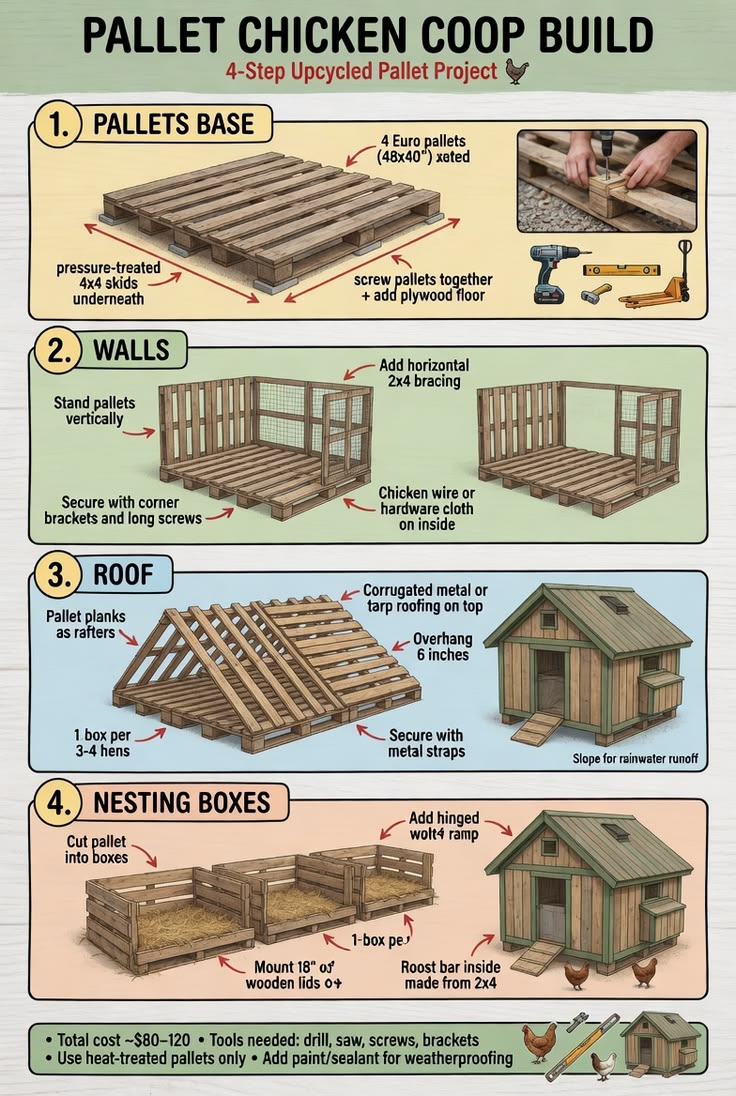
Large Walk-In Chicken Coop Designs for Bigger Flocks
When your flock grows past a handful of hens, a small pre-fab box simply stops working. Birds get crowded, ventilation suffers, eggs get dirty, and daily chores become a frustrating crouch-and-reach routine. A large walk-in chicken coop solves all of that. It gives your birds room to thrive and gives you a comfortable, stand-up space to collect eggs, refill feeders, and clean without breaking your back.
In this guide, we will walk through the smartest walk-in chicken coop designs for bigger flocks, the features that actually matter, the materials that last for years, and the products that make building or upgrading a walk-in coop far easier.
Whether you keep ten hens or forty, the principles below will help you plan a coop that stays clean, stays secure, and keeps your birds laying through every season.
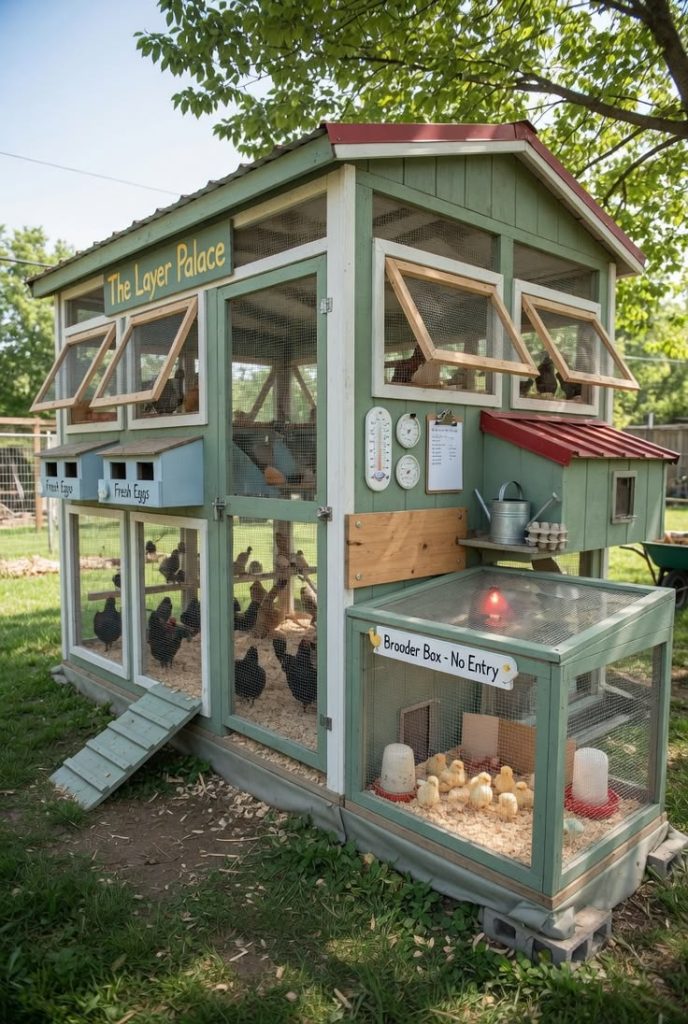
Why a Walk-In Coop Makes Sense for Bigger Flocks
The biggest advantage of a walk-in design is simple: you can stand inside it. That single feature changes the entire ownership experience. Cleaning a low compact coop means kneeling in bedding and reaching into dark corners, which is exactly why so many small coops end up neglected. A walk-in coop turns that chore into a five-minute task you will actually keep up with, and a clean coop is a healthy coop.
Bigger flocks also produce more moisture, more ammonia, and more heat. A larger interior volume dilutes all three, keeping the air fresher and the bedding drier. More floor space means less pecking, less bullying, and fewer stress-related problems like feather picking. When hens are not fighting for territory, they lay more consistently and stay healthier overall.
Finally, a walk-in structure is far more flexible. You can hang feeders and waterers at the right height, add brooder partitions for chicks, store feed inside, and reconfigure roosts as your flock changes. It is a long-term investment that grows with you.
How Much Space Does a Bigger Flock Really Need?
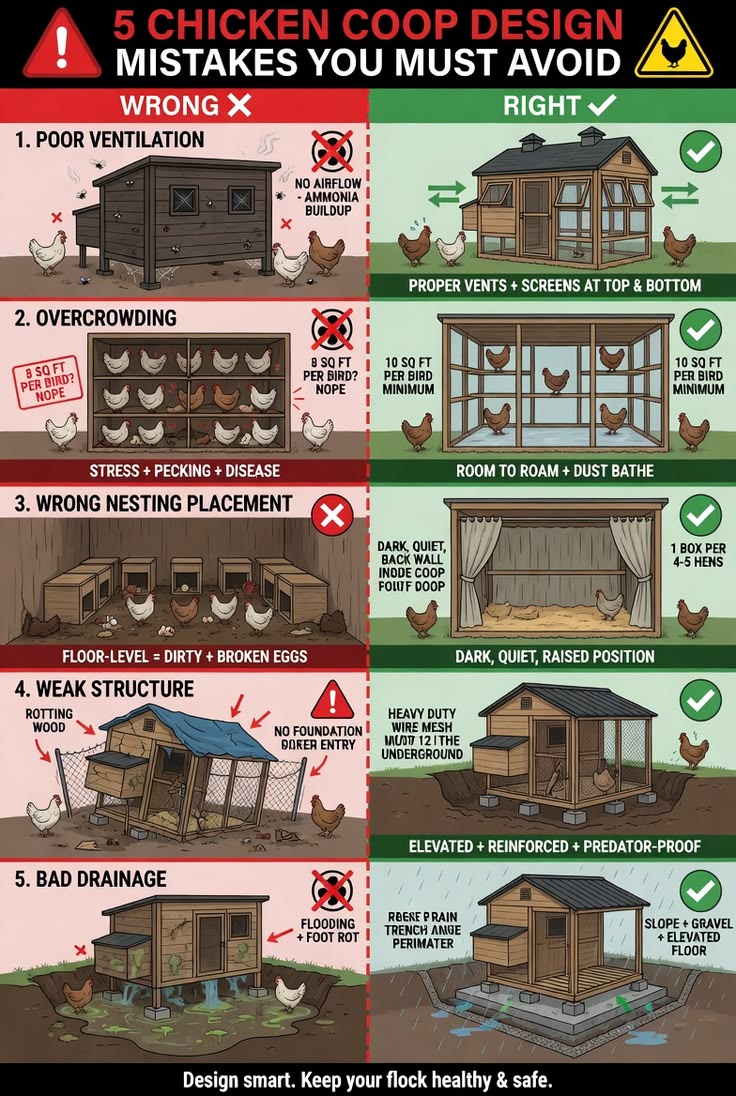
Space is the number one factor that separates a healthy flock from a stressed one. As a working rule, plan for at least 4 square feet of indoor coop floor per standard hen, and 8 to 10 square feet per bird in the attached run. Bantams need a little less, while large heavy breeds like Orpingtons or Brahmas appreciate more.
For a flock of 15 to 20 birds, that means roughly 60 to 80 square feet of indoor space, which is comfortably in walk-in territory. Going generous on space is almost never a mistake. Overcrowding is the root cause of most behavioral and health issues in backyard flocks, so when in doubt, build bigger than you think you need.
Key Design Features of a Large Walk-In Coop
Floor Space and Headroom
Aim for at least 6 feet of interior headroom so an adult can move around comfortably. A poured concrete or paver floor is the gold standard because it is rodent-proof and easy to hose out, but a well-sealed wood floor over a raised frame also works well. Whatever you choose, slope the area outside the door slightly so rainwater drains away from the structure.
Ventilation
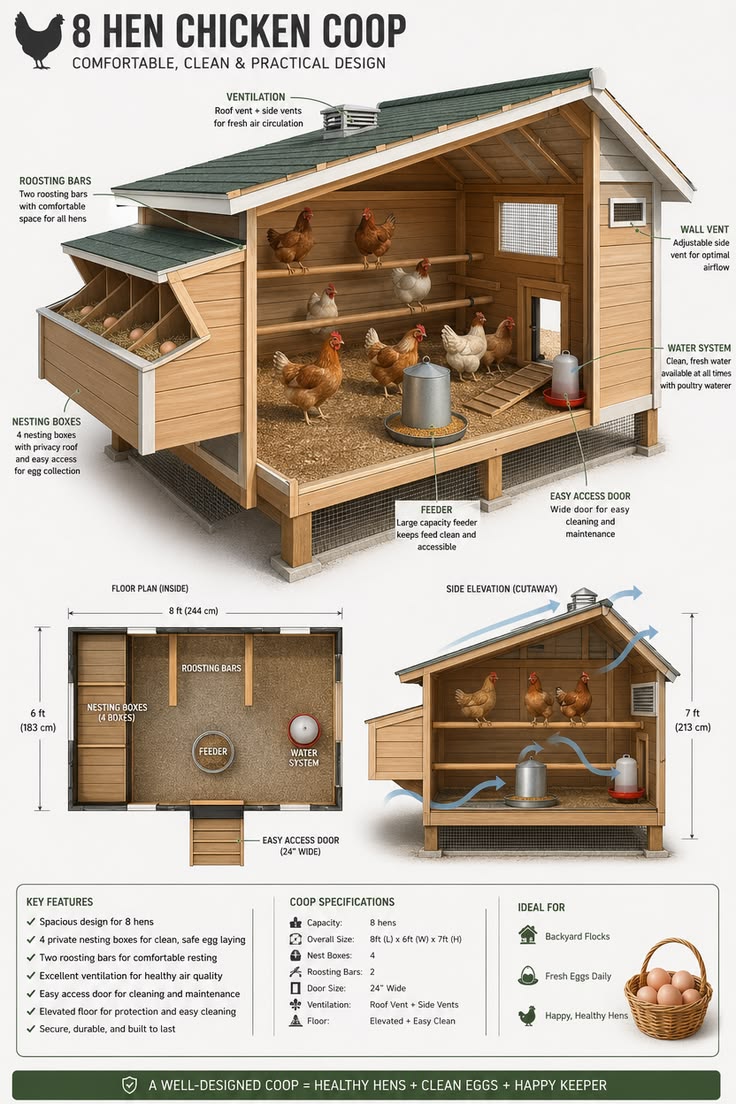
Ventilation is the most under-appreciated feature in any coop. Chickens give off a surprising amount of moisture and ammonia, and trapped humid air leads to respiratory illness and frostbite in winter. Place vents high near the roofline so warm, damp air escapes without creating a cold draft at roost level. A good target is roughly 1 square foot of vent opening per 10 square feet of floor, all covered in hardware cloth.
Roosting Bars
Hens want to sleep up high. Provide about 8 to 12 inches of roosting bar per bird, using rounded 2×4 lumber laid flat so birds can cover their toes in cold weather. Stagger bars at different heights and keep them higher than the nesting boxes, otherwise birds will sleep in the boxes and foul your eggs.
Nesting Boxes
One nesting box for every 3 to 4 hens is plenty, since they tend to share favorites. Mount boxes about 18 inches off the floor, fill them with clean straw or pine shavings, and consider roll-away designs for cleaner eggs in a bigger flock.
Top Pick: Large Walk-In Chicken Coop Kits
Pre-engineered walk-in coops save weeks of construction time and are sized for larger flocks, with built-in vents, roosts, and nesting boxes ready to assemble.
Best Walk-In Chicken Coop Styles
The Shed-Style Walk-In
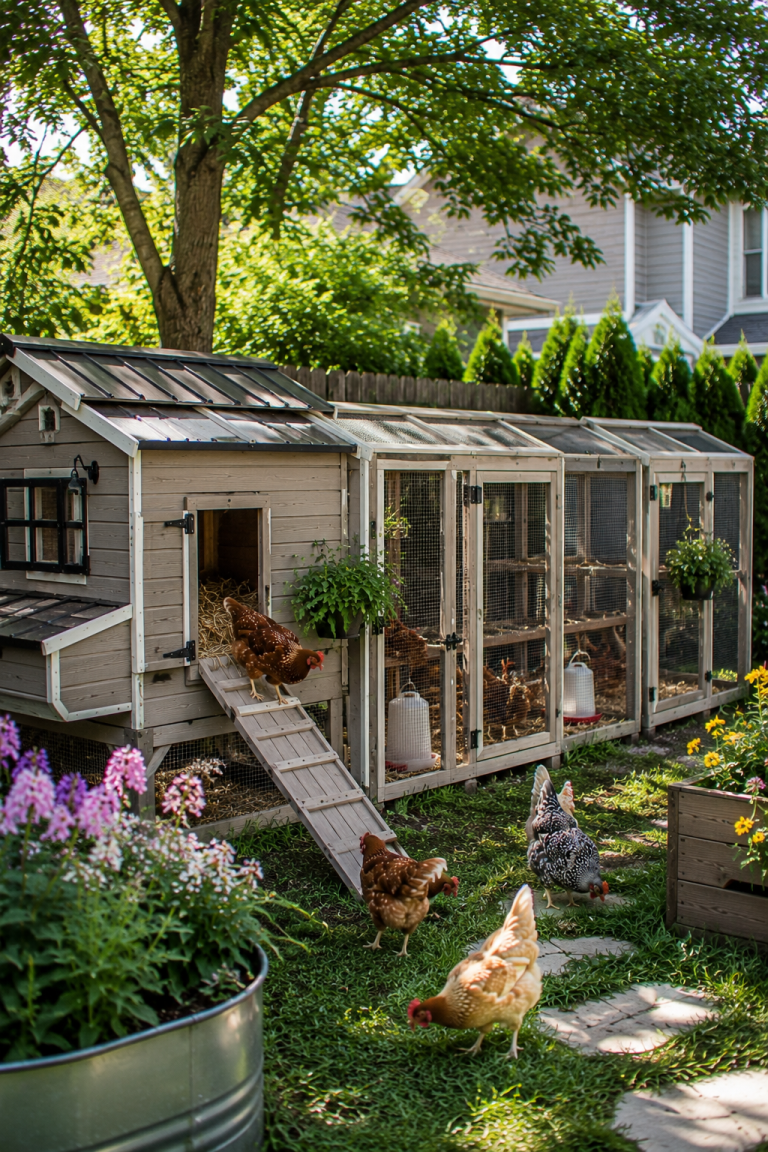
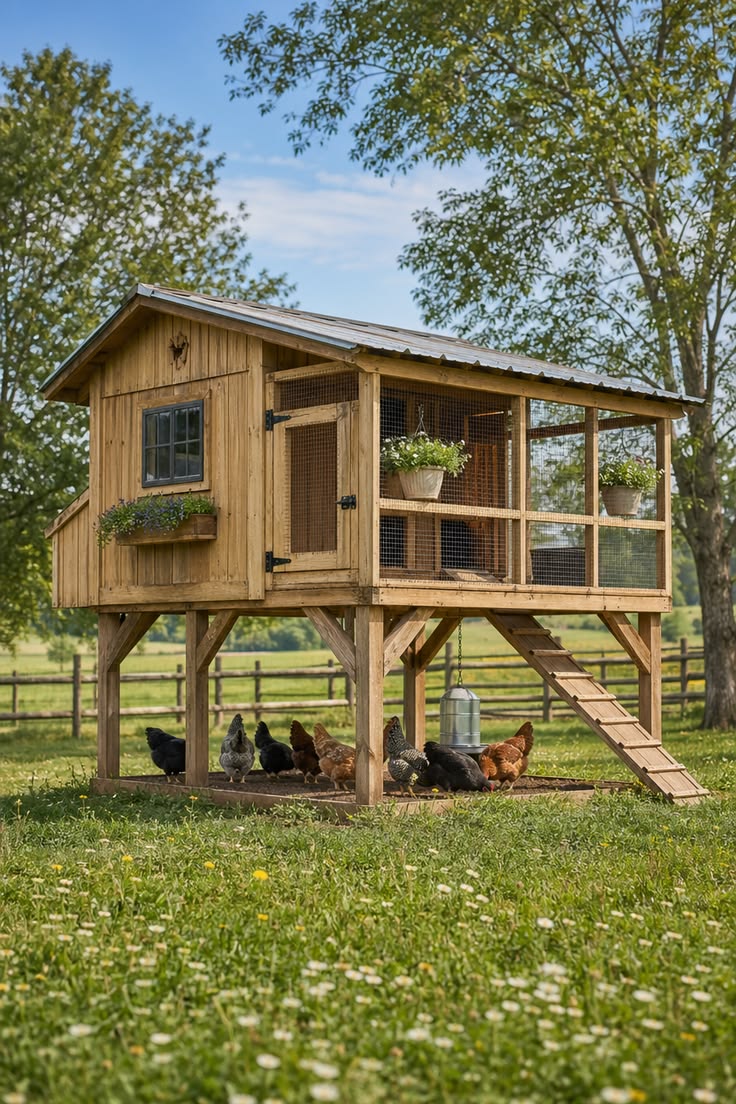
A converted or purpose-built shed is the most popular walk-in design for good reason. The tall front wall and sloped roof give excellent headroom, easy door access, and generous wall space for windows and vents. Sheds are simple to insulate, simple to wire for light or heat, and they look tidy in a backyard. If you want a coop that doubles as feed storage and a chore station, a shed-style build is hard to beat.
The A-Frame Walk-In
For sloped yards or budget builds, a tall A-frame uses fewer materials while still offering standing room down the center aisle. The steep roof sheds rain and snow effortlessly. The trade-off is reduced usable wall space, so plan roosts and boxes along the lower edges and keep the center clear for walking.
The Convertible Greenhouse Walk-In
In colder climates, a hybrid greenhouse-coop captures winter sun to keep birds warmer and water from freezing. Clear polycarbonate panels on the south wall trap heat during the day, while heavy ventilation prevents summer overheating. This style takes more planning but pays off in northern winters.
Recommended Coops, Runs, and Upgrades
If you are buying rather than building from scratch, the right kit and accessories make a walk-in coop dramatically easier to live with. These are the categories worth investing in for a bigger flock.
Walk-In Coop with Attached Run
A coop with an integrated covered run keeps birds protected during the day and gives them safe outdoor space even when you cannot supervise.
Automatic Chicken Coop Door
An automatic door opens at dawn and locks at dusk on a timer or light sensor, which is a lifesaver when you manage a larger flock and cannot always be home at sundown.
Bulk Feeders and Waterers
Large hanging feeders and gravity-fed or nipple waterers cut your chore time and reduce waste, which matters a lot once you are feeding twenty or more birds.
Materials That Last
A walk-in coop is a multi-year structure, so build it from materials that survive weather and clawed feet. Use pressure-treated lumber for any ground contact, exterior-grade plywood or shiplap for walls, and metal or asphalt roofing rated for your climate. The single most important material choice is your fencing: skip flimsy chicken wire, which raccoons tear through easily, and use 19-gauge hardware cloth with half-inch openings on every window, vent, and run panel.
Hardware Cloth for Predator Protection
Half-inch galvanized hardware cloth is the difference between a coop that gets raided and one that stays safe. Use it on all openings and bury it around the perimeter.
Predator Proofing a Walk-In Coop
Bigger flocks attract bigger attention from predators, so security cannot be an afterthought. Bury hardware cloth at least 12 inches deep around the entire perimeter, or lay a 2-foot apron flat on the ground to stop diggers. Use locking, two-step latches on every door, because raccoons can defeat simple slide bolts. Cover the run with welded wire or netting to keep out hawks and climbing predators, and walk the structure each week looking for new gaps or loose staples.
Maintenance and Cleaning Made Easy
The whole point of a walk-in coop is easy upkeep, so design for it. The deep litter method works beautifully in a large coop: start with a thick layer of pine shavings, stir in fresh bedding weekly, and let it compost in place over the season before a full clean-out. Keep a dedicated rake and scraper inside, install a removable droppings board under the roosts, and your weekly cleaning will rarely take more than ten minutes.
Adding Light and Power to a Walk-In Coop
One overlooked advantage of a walk-in coop is how easy it is to wire for electricity, which unlocks several useful features for a bigger flock. A single weatherproof outlet lets you run a heated waterer base in winter so your birds always have liquid water, power a thermostatically controlled flat-panel heater in extreme cold, and add lighting for those dark early mornings when you do chores before sunrise.
Many keepers also use a timer-controlled light to extend daylight hours in winter, since hens need about 14 to 16 hours of light to keep laying through the short days. Always use outdoor-rated wiring, GFCI protection, and keep cords and fixtures well out of reach of curious beaks. If you are not comfortable with electrical work, have a licensed electrician run a dedicated circuit, as it is well worth the investment for a permanent coop.
Budgeting Your Walk-In Coop Build
A walk-in coop is a bigger upfront investment than a small pre-fab box, but it pays for itself in durability and ease of use. If you build from scratch, your highest costs will be lumber, roofing, and hardware cloth, followed by hinges, latches, and any windows. Buying a pre-engineered walk-in kit costs more per square foot but saves weeks of labor and guarantees a sound structure.
A smart middle path is to buy a basic shed or coop shell and customize the interior yourself with roosts, boxes, and ventilation. Wherever you can, spend on the things that protect your flock and your time: quality hardware cloth, strong latches, durable roofing, and an automatic door. Cutting corners on those items almost always costs more later in repairs or lost birds.
Frequently Asked Questions
How big should a walk-in coop be for 20 chickens?
Plan for at least 80 square feet of indoor floor space for 20 standard hens, roughly an 8-by-10-foot footprint, plus a run of 160 to 200 square feet. Going larger reduces stress and pecking.
Do walk-in coops need a floor?
A solid floor is strongly recommended for bigger flocks. Concrete or pavers are easiest to clean and fully rodent-proof, while a raised sealed-wood floor also works if you protect the underside with hardware cloth.
How many nesting boxes do I need for a large flock?
One box for every 3 to 4 hens is sufficient. Hens share boxes, so even a flock of 20 typically only needs about 5 or 6 well-placed boxes.
Can I heat a walk-in coop in winter?
Most breeds do not need added heat if the coop is dry and draft-free. Good ventilation matters more than heat. If you do add a heat source, use a flat-panel radiant heater rather than a heat lamp to reduce fire risk.
Final Thoughts
A large walk-in chicken coop is one of the best upgrades you can make once your flock outgrows a starter box. It rewards you with healthier birds, cleaner eggs, easier chores, and a structure that adapts as your flock changes. Focus on generous space, strong ventilation, predator-proof hardware cloth, and quality materials, and you will have a coop that serves you well for many years. Use the recommended products above to shortcut the build and get your bigger flock settled into a safe, comfortable home.