12 Chicken Run Ideas for a Safe, Enriching Backyard Flock
The outdoor run is where your chickens spend most of their waking hours. A good run is secure against predators, spacious enough to prevent boredom and pecking, and enriched with features that let your flock behave naturally. These 12 chicken run ideas range from simple wire enclosures to elaborate multi-feature outdoor environments.
12 Chicken Run Ideas:
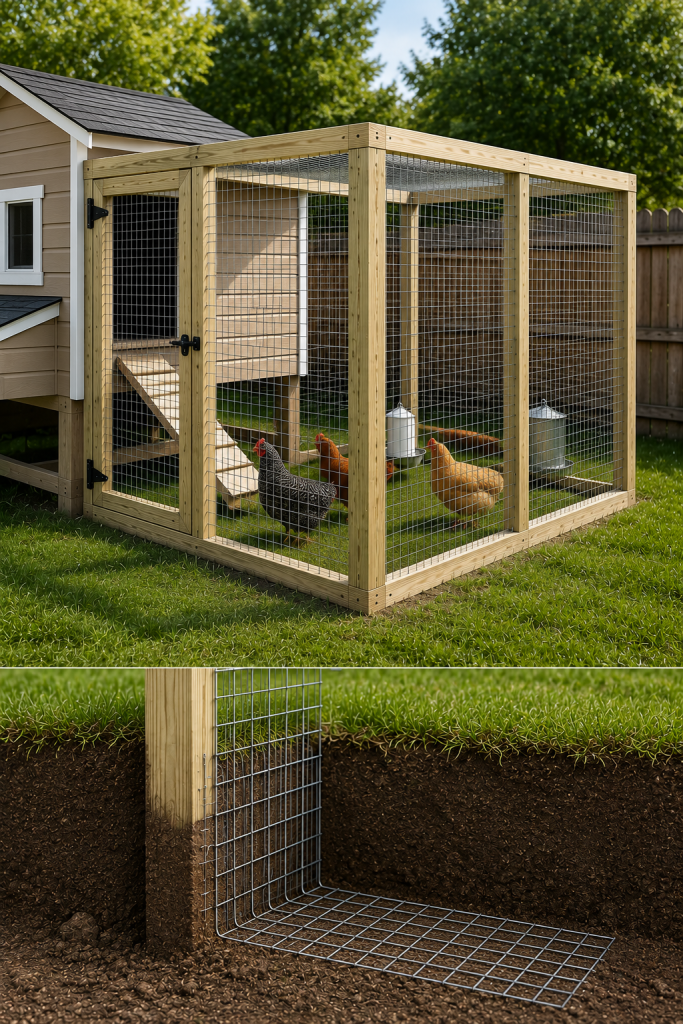
01/ The Classic Framed Wire Run
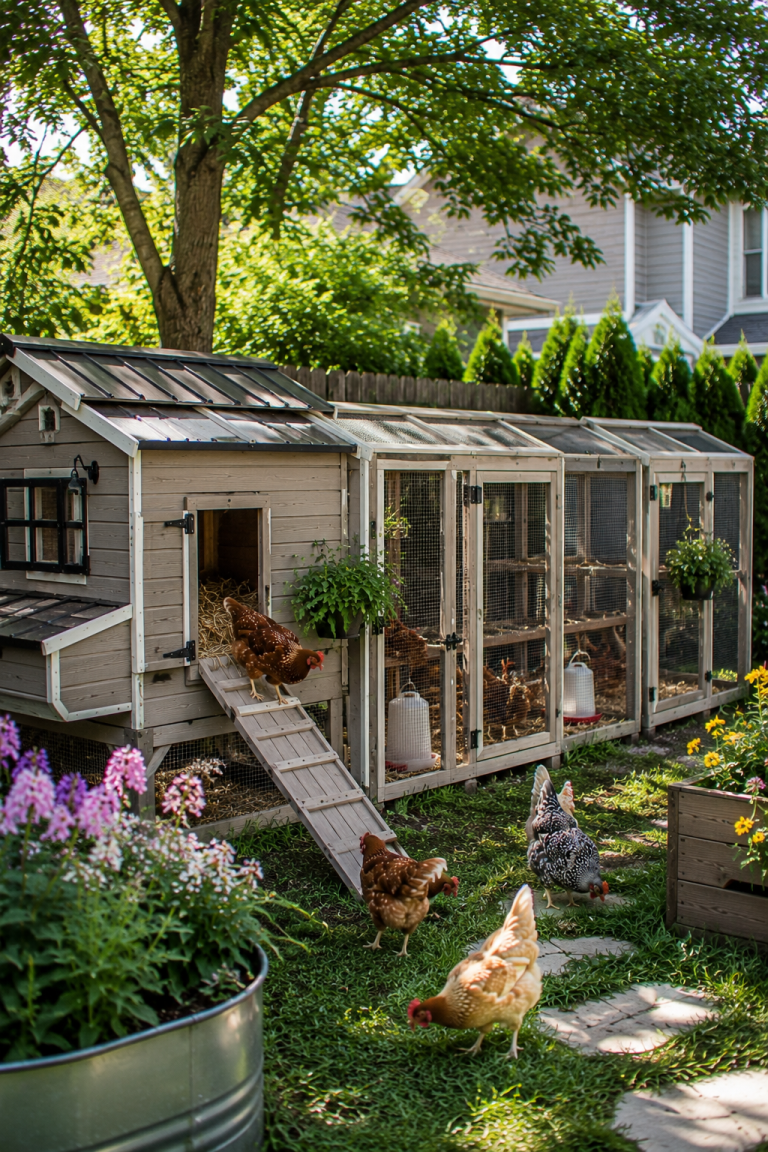
A rectangular frame of treated lumber posts with hardware cloth or galvanized welded wire panels. The most common and most reliable run design. Bury the hardware cloth foundation 12 inches deep in an L-shape to prevent digging.
02/ The Covered Tunnel Run
A series of arched hoops covered with hardware cloth create a tunnel run that connects the coop to a larger ranging area. Chickens travel safely through the tunnel, expanding their ranging area while remaining predator-protected.
03/ The Shaded Sand Run
Fill the run floor 6 to 8 inches deep with clean construction sand. Add shade cloth over half the run area. The sand drains well, stays clean, and provides excellent dust-bathing material. One of the most practical run floor solutions available.
04/ The Covered Aviary-Style Run
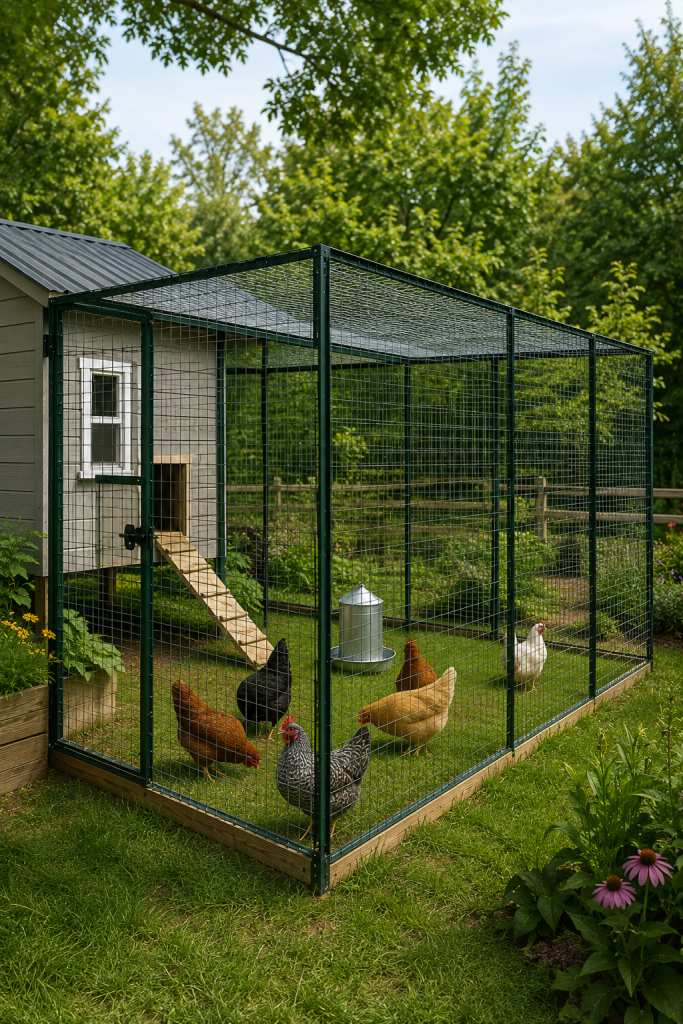
A fully covered run with hardware cloth or weld mesh overhead prevents aerial predators and keeps the run dry in rain. Frame from galvanized T-posts with a stretched mesh roof. Essential in areas with hawks, owls, or heavy rainfall.
05/ The Deep Litter Run
Cover the run floor with 8 to 12 inches of wood chips, straw, leaves, and compost materials. The deep litter composts in place, stays warm in winter, absorbs moisture, and provides constant foraging interest. Top up rather than fully replace.
06/ The Multi-Level Run
Install perches, platforms, ramps, and stumps at different heights inside the run. Chickens naturally prefer elevated positions and multi-level runs reduce competition and boredom dramatically. A $0 to $50 enrichment upgrade.
07/ The Rotating Pasture Run
Two or three run areas connected by a gate system, rotated on a schedule. When one area is recovering and regrowing vegetation, the flock moves to the next. The result is permanent green pasture access with no permanent bare ground.
08/ The Greenhouse Run
A polycarbonate greenhouse frame creates a covered, warm, light-flooded run extension. Excellent for cold climates where outdoor access is limited in winter. Grows chicken-safe plants inside for enrichment.
09/ The Herb Garden Run Perimeter
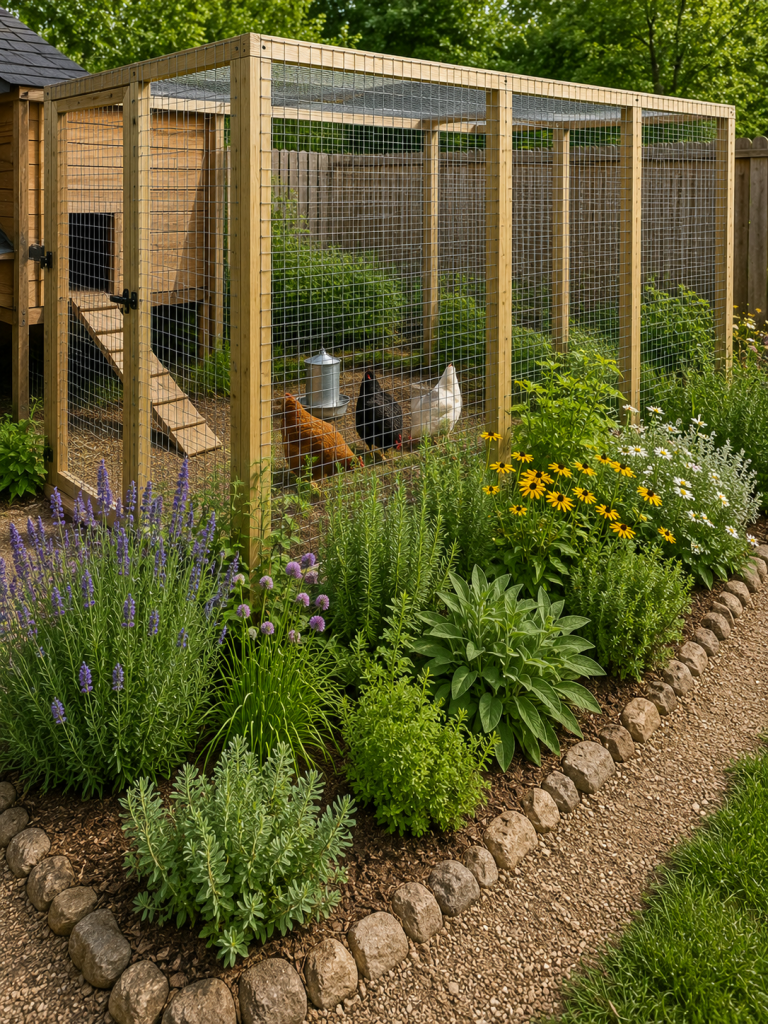
Plant a border of chicken-safe herbs and perennial flowers around the outside of the run fence. Chickens peck at anything that grows through the wire. The border looks beautiful and provides genuine nutritional enrichment.
10/ The Orchard Under-Planting Run
Position the run beneath an established fruit tree. The tree provides shade, drops fruit for the flock, and the chickens control pests and fertilize the root zone naturally. One of the most productive garden integrations possible.
11/ The Dust Bath Station
Dedicate one corner of the run to a permanent dust bathing area: a large wooden frame or old bathtub filled with fine dry soil, wood ash, diatomaceous earth, and garden soil. Dust bathing is essential for natural parasite control.
12/ The Secure Night Run
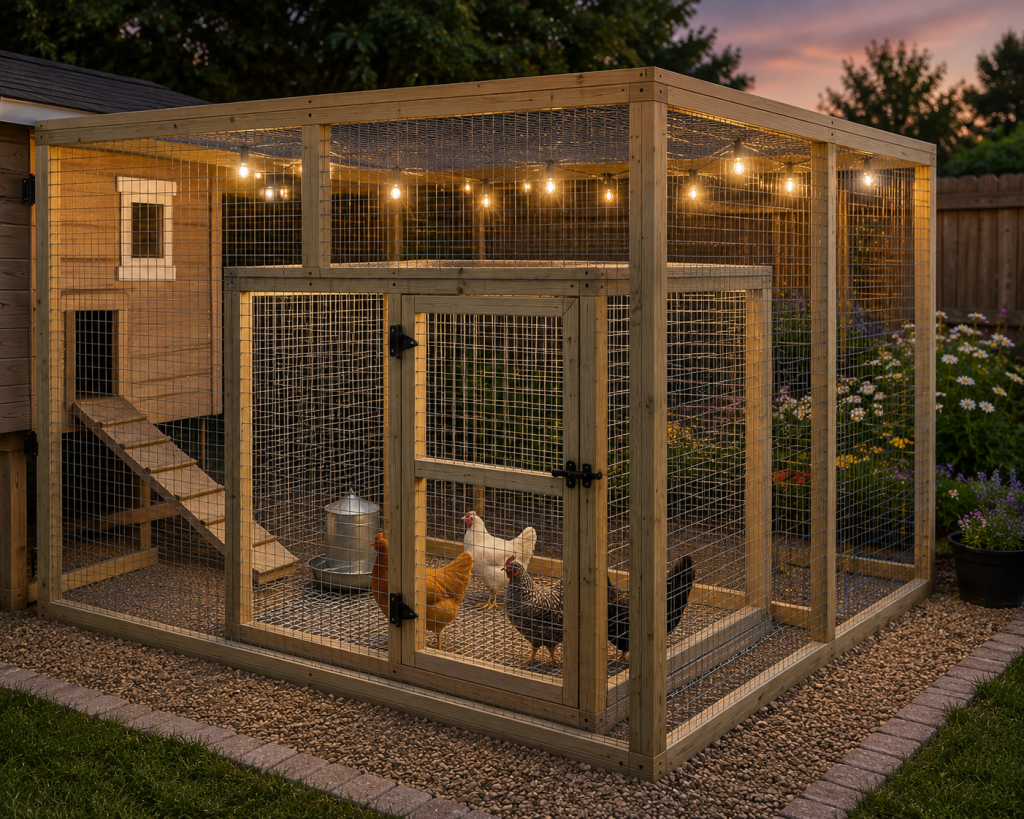
A smaller, extra-secure inner run for birds that cannot be easily returned to the coop before dusk. Double-fence the inner area with hardware cloth on all surfaces, including the floor. Used as an emergency secure holding area.
Essential Run Fencing
- Hardware cloth on the lower 24 inches of run walls — prevents raccoon reach-through
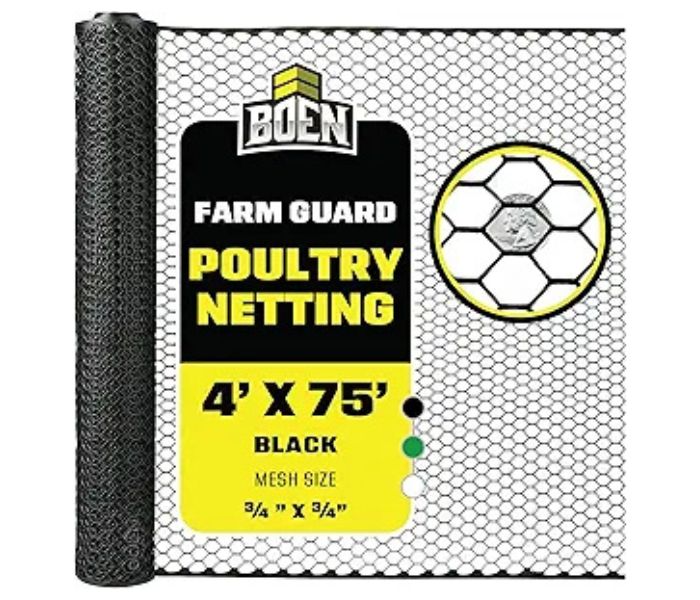
- Poultry netting on upper run walls and overhead cover
- Galvanized poultry staples for attaching wire to wooden frames
Frequently Asked Questions:
How big does a chicken run need to be?
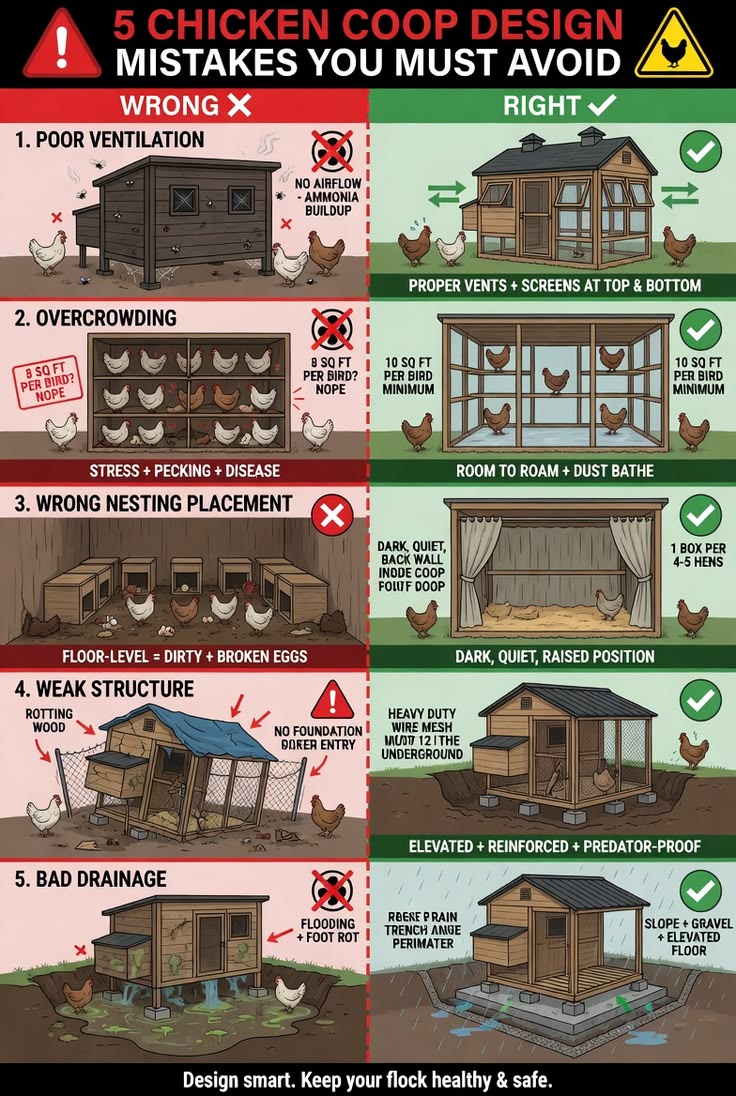
Allow 10 square feet of run per hen as a minimum. More is always better. A flock of 6 hens needs 60 square feet of run space minimum.
What is the best flooring for a chicken run?
Construction sand is the most practical option — it drains well, is easy to clean, and provides excellent dust bathing material. Deep wood chips work well too. Grass cannot survive full-time occupancy by chickens.
How do I stop a chicken run from smelling?
Deep litter management, regular raking, and occasional addition of agricultural lime control odor effectively. Adequate drainage and covering the run to prevent rain saturation are also critical.