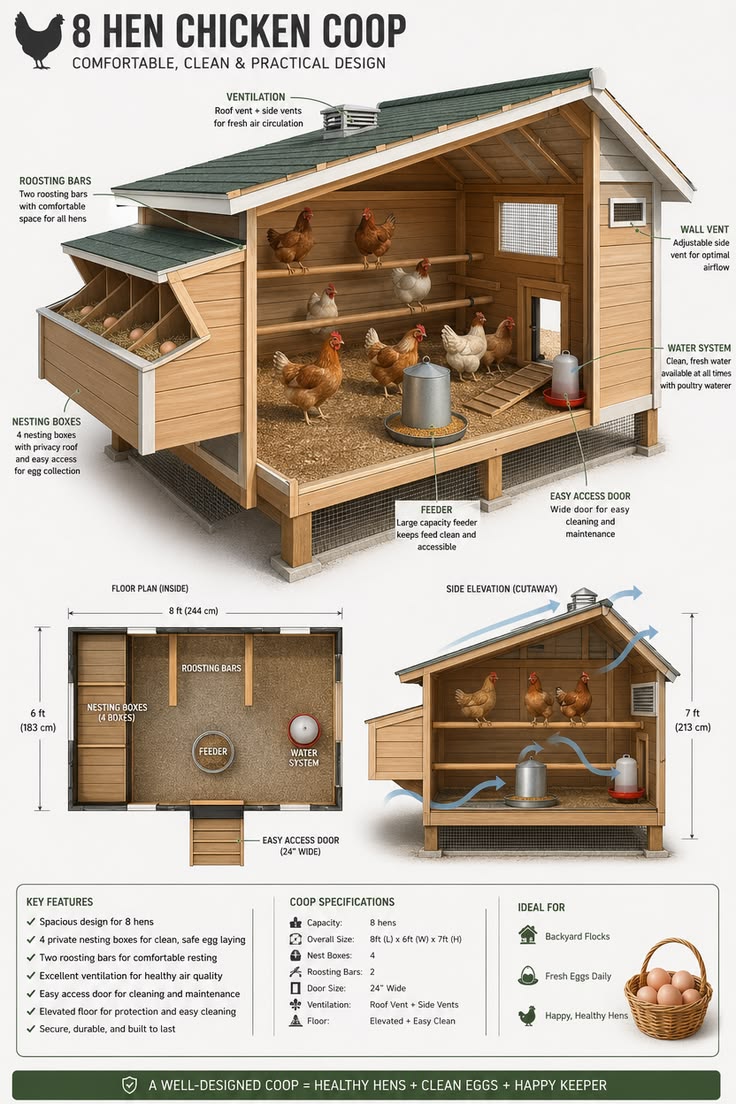
Stop These 5 Chicken Coop Mistakes Before They Cost You
Most chicken coop problems are not caused by bad luck. They come from a handful of avoidable mistakes that new and even experienced keepers make over and over. The frustrating part is that these errors are invisible until something goes wrong: a sick bird, a predator break-in, dirty eggs, or a coop that smells terrible.
The good news is that every one of these mistakes is easy to fix once you know what to look for. In this guide, we will break down the five most common chicken coop mistakes, explain exactly why each one matters, and show you the simple solutions and products that prevent them.
Fix these five things, and you will dodge the vast majority of headaches that drive new chicken keepers crazy.
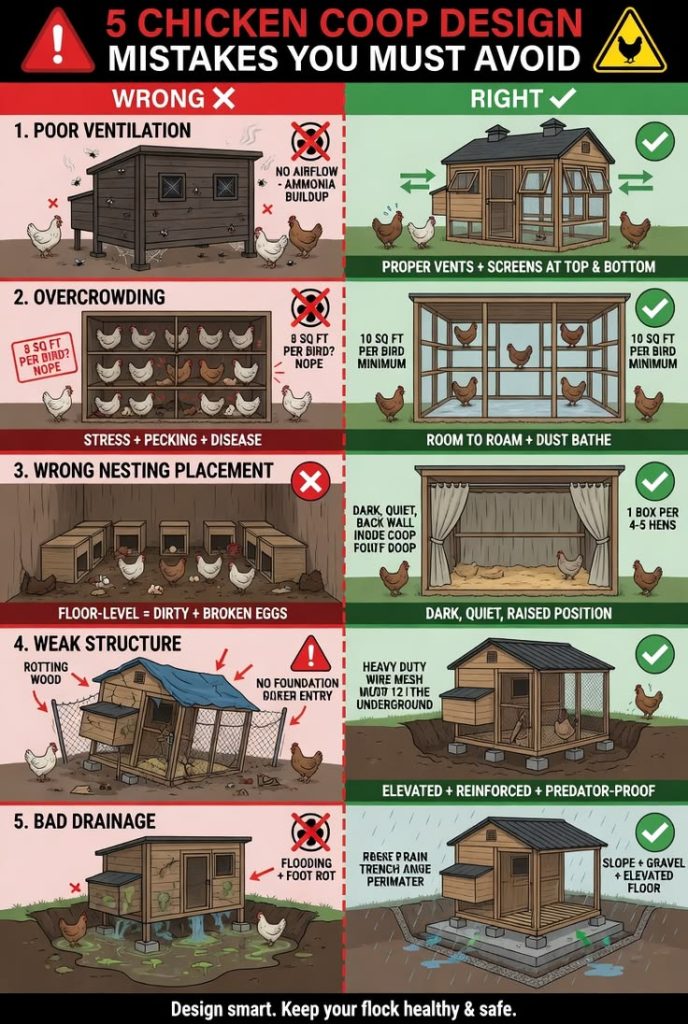
Mistake 1: Poor Ventilation
This is the single most common and most damaging mistake in backyard coops. New keepers often build a tight, sealed box to keep birds warm, not realizing that chickens release a large amount of moisture and ammonia through their breath and droppings.
When that humid, ammonia-laden air has nowhere to go, it leads to respiratory infections, eye irritation, and frostbitten combs in winter. Ironically, a sealed coop is colder and more dangerous than a well-ventilated one because trapped moisture chills the birds.
How to Fix It
Add ventilation high on the walls near the roofline, well above where the birds roost. This lets warm, damp air escape without creating a cold draft on sleeping hens. Aim for roughly 1 square foot of vent opening per 10 square feet of floor space, and cover every opening with hardware cloth. The rule to remember is simple: ventilation high, no drafts low.
Solution: Hardware Cloth for Vents
Cut high vents and cover them with half-inch hardware cloth to release moisture safely while keeping predators and pests out.
Mistake 2: Relying on Chicken Wire for Security
The name is misleading. Chicken wire is designed to keep chickens in, not to keep predators out. Raccoons reach right through the wide hexagonal holes, dogs and foxes tear it open, and weasels slip through gaps. Countless keepers learn this the hard way after a single devastating night. If your coop or run relies on chicken wire as its main barrier, it is only a matter of time before a predator finds the weakness.
How to Fix It
Replace chicken wire with half-inch, 19-gauge galvanized hardware cloth on every window, vent, and run panel. Screw it down with washers rather than stapling it, since raccoons can pull staples free. Bury hardware cloth around the perimeter or lay a flat apron to defeat diggers. This one change does more for flock safety than almost anything else.
Solution: Galvanized Hardware Cloth
Swapping flimsy chicken wire for sturdy hardware cloth is the most important predator-proofing upgrade you can make.
Mistake 3: Overcrowding the Flock
It is tempting to squeeze in just a few more birds, but overcrowding is a silent flock killer. When chickens lack space, stress rises and behavioral problems explode: feather picking, bullying, egg eating, and the rapid spread of disease and parasites. Crowded coops also get filthy fast, since the same droppings concentrate in a smaller area. Many keepers blame their birds for bad behavior when the real culprit is simply too little room.
How to Fix It
Give each standard hen at least 4 square feet of indoor coop space and 8 to 10 square feet in the run. If you are over capacity, either expand the coop, add a larger run, or rehome a few birds. Resist the urge to add more chickens than your space can comfortably hold. A smaller, well-housed flock is happier and more productive than a crowded one.
Solution: Add a Larger Coop or Run
If your flock has outgrown its space, a bigger coop or an expanded run instantly relieves the stress and mess that overcrowding causes.
Mistake 4: Neglecting Cleaning and Pest Control
A coop that is not cleaned regularly becomes a breeding ground for ammonia, mold, mites, and lice. Red mites in particular hide in cracks and feed on your hens at night, leaving birds anemic, stressed, and off the lay. Damp, soiled bedding also causes foot problems and respiratory illness. Many keepers underestimate how quickly a coop goes from fresh to foul, especially with a bigger flock.
How to Fix It
Adopt a simple cleaning rhythm. Spot-clean droppings boards daily or every few days, refresh bedding weekly, and do a deep clean each season. Use the deep litter method to compost droppings in place and cut down on labor. Dust roosts, nesting boxes, and cracks periodically with a poultry-safe mite powder or diatomaceous earth to keep parasites from ever gaining a foothold.
Solution: Poultry Mite and Lice Powder
A poultry-safe dust applied to roosts, boxes, and crevices stops red mites and lice before they can drain your flock’s health.
Mistake 5: Forgetting to Secure the Coop at Night
Even a perfectly built coop is useless if the door is left open at night. The most heartbreaking flock losses happen at dawn and dusk, exactly when keepers are asleep, away, or simply forgot to close up. Relying on memory to lock the coop every single evening is a gamble, and predators only need you to forget once.
How to Fix It
Install an automatic coop door that closes at dusk and opens at dawn on a timer or light sensor. It removes human error from the equation and guarantees your flock is sealed in every night, whether you are home or not. Pair it with secure, raccoon-proof latches on all human access doors, and your nightly security becomes automatic and reliable.
Solution: Automatic Coop Door
An automatic door eliminates the deadly habit of forgetting to lock up, sealing your flock in safely every night without fail.
Bonus: Small Habits That Prevent Big Problems
Beyond the big five, a few small habits keep your coop trouble-free. Walk the structure weekly to spot loose hardware, gaps, or dug holes. Provide a dust-bathing area so birds can manage parasites naturally. Keep feed in rodent-proof metal containers so you do not attract rats. Check your birds individually now and then for signs of mites, injury, or illness. These quick routines catch problems while they are still small and cheap to fix.
How to Audit Your Existing Coop?
If your coop is already built, run through this quick audit to catch any of the five mistakes before they cause trouble. Stand inside and look up: can you see daylight or feel airflow near the roofline? If not, you likely need more ventilation. Run your hand along every barrier and ask whether a raccoon could reach through or a dog could tear it open, replacing any chicken wire you find.
Count your birds against your square footage to confirm you are not overcrowded. Inspect the bedding and corners for dampness, ammonia smell, or signs of mites. Finally, check how the coop is secured at night and whether that security depends on you remembering to close a door. Working through this list takes ten minutes and reveals exactly where to focus your fixes.
A Simple Seasonal Coop Care Calendar
Many coop mistakes stem from inconsistent care, which a simple seasonal routine prevents. In spring, do a deep clean, check for winter damage, and treat preventively for mites as the weather warms. In summer, prioritize ventilation and shade, refresh water often, and watch closely for parasites, which peak in the heat.
In the fall, repair any gaps before winter, top up bedding, and confirm your predator defenses are solid as hungry animals become bolder. In winter, focus on keeping the coop dry and draft-free, preventing water from freezing, and maintaining ventilation even in the cold. Following this rhythm spreads the work out and ensures none of the five big mistakes ever creeps back in unnoticed.
Why These Mistakes Are So Costly
It is worth understanding why these particular errors deserve your attention over everything else. Each one attacks your flock at a vulnerable point and tends to cascade. Poor ventilation weakens birds and makes them prone to every other illness. Weak security can erase your entire flock in a single night.
Overcrowding multiplies disease and behavioral problems at once. Neglected cleaning invites parasites that drain your hens slowly. And an unsecured coop turns every other precaution into wasted effort.
Fixing these five is not about chasing perfection; it is about removing the failure points most likely to cause real loss, which is the best return on effort in all of chicken keeping.
Frequently Asked Questions:
What is the most common chicken coop mistake?
Poor ventilation is the most common and most harmful mistake. Sealed coops trap moisture and ammonia, causing respiratory illness and winter frostbite. The fix is high vents that release damp air without creating drafts.
Is chicken wire safe for a coop?
No. Chicken wire keeps birds in, but does not keep predators out. Use half-inch hardware cloth on all openings and barriers instead.
How often should I clean my chicken coop?
Spot-clean every few days, refresh bedding weekly, and deep clean each season. Regular cleaning prevents ammonia buildup, mites, and disease.
How do I keep predators out at night?
Install an automatic door that locks at dusk, use raccoon-proof latches, and cover all openings with hardware cloth. Never rely on remembering to close the coop manually.
Helping New Keepers Avoid These Mistakes
If you are mentoring a friend or family member who is just starting with chickens, these five lessons are the ones to share first, because they prevent the most common early heartbreaks.
Encourage new keepers to over-build on ventilation and space rather than under-build, since both are hard to add later. Steer them away from the chicken wire that nearly every beginner reaches for, and toward proper hardware cloth from day one. Help them set up a realistic cleaning routine before they get birds, so good habits start early.
And emphasize that nighttime security cannot rely on memory, making an automatic door one of the best first purchases. New keepers who learn these five lessons up front skip the painful trial and error that drives so many beginners to give up, and instead enjoy a smooth, rewarding start to the hobby.
Progress Over Perfection
If reading through these mistakes has you worried about your own coop, take a breath, because you do not have to fix everything at once. Start with the issue that poses the greatest immediate risk, which is usually nighttime security or ventilation, and work down the list as time and budget allow.
Every single improvement you make reduces your flock’s risk, even if the setup is not yet perfect. Chicken keeping rewards steady, practical attention far more than it demands flawless execution.
Tackle these five mistakes one at a time, and within a few weekends, you will have transformed a vulnerable coop into a safe, healthy, low-stress home for your birds.
Final Thoughts
Nearly every coop disaster traces back to one of these five mistakes: poor ventilation, weak security, overcrowding, neglected cleaning, or leaving the coop open at night. The encouraging truth is that each one has a simple, affordable fix.
Address all five, and you will sidestep the problems that frustrate most keepers, keeping your flock healthy, safe, and productive year-round. Use the solutions and products above to correct any weak points in your setup today, before they cost you a bird.