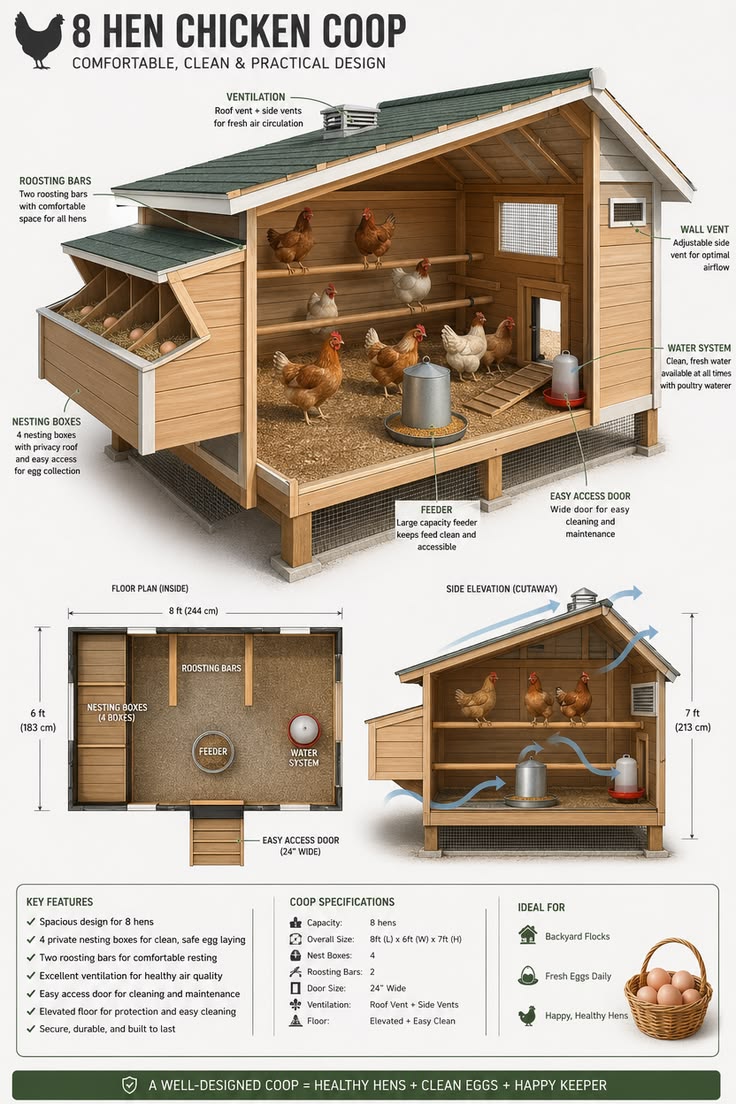
Backyard Garden and Chicken Coop Layouts: 8 Designs That Work
Where you position your chicken coop relative to your garden, house, and outdoor living spaces affects everything: daily convenience, predator management, smell, noise, aesthetics, and how effectively your chickens contribute to the garden ecosystem. These 8 backyard layout ideas show different approaches for different property types and priorities.
Key Principles Before You Plan Your Layout
- Position the coop for daily convenience — you visit it every day, often in bad weather
- Allow for drainage — coops and runs generate wet conditions, locate where water drains away from the house
- Consider the prevailing wind — if the wind blows toward the house, odor from the run may become a problem
- Sunlight matters — south-facing coop with solar panels and light-facing windows maximizes egg production
- Keep the run visible from the house — you will spot predator activity much sooner
8 Backyard Layout Ideas

01/ The Kitchen Garden Perimeter Layout
The chicken coop positioned at the far end of the garden, with the run along one side of the main vegetable growing area. Chickens have visual connection to the garden but are separated from it by fencing. Allows controlled access for seasonal garden clearing.
02/ The Corner Coop Layout
The coop tucked into a corner of the property, using two existing fences as walls of the run. Maximizes the open garden area. The dedicated coop corner becomes a productive micro-zone with compost, feed storage, and tool space all together.
03/ The Central Compost Hub Layout
The compost system positioned between the coop and the vegetable garden. Kitchen scraps go to the chickens. Coop waste goes to the compost. Finished compost goes to the garden beds. Everything within 15 steps of each other.
04/ The Orchard Integration Layout

The chicken run positioned within or beside a small orchard. The tree canopy provides natural shade and enrichment. Chickens control pests, fertilize root zones, and eat fallen fruit. The most productive garden-chicken integration possible.
05/ The Rotating Pasture Layout
The property divided into two or three grazing zones with the coop at the centre. Chickens rotate through zones on a schedule, never permanently depleting any single area. The result is permanent green pasture access year-round.
06/ The Garage Wall Lean-To Layout
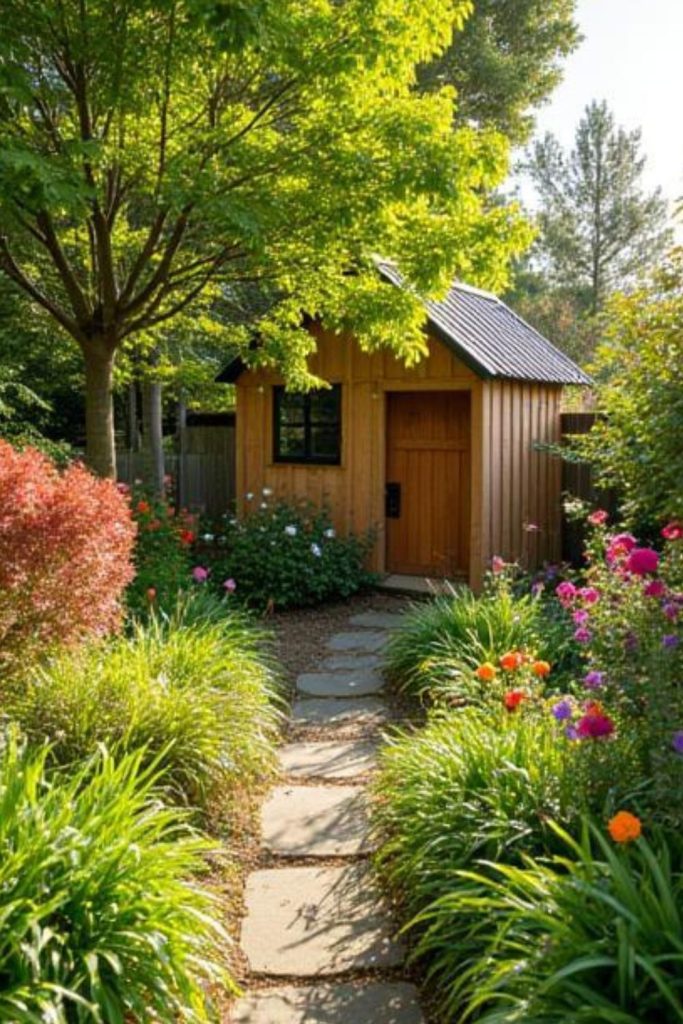
The coop built against the garage or outbuilding wall, using the existing structure for one side. The lean-to extends the garage footprint into productive use. Excellent for small properties where every square foot matters.
07/ The Food Forest Zone Layout
Permaculture-influenced — the coop and run positioned in the outer productive zones of a food forest design. Chickens work the understory of established fruit and nut trees, operating almost autonomously within the designed system.
08/ The Front Garden Coop Layout
In properties with large front gardens and small rear gardens, a well-designed and attractive coop can work in the front garden. This requires a very well-designed, beautiful coop and excellent odor and fly management.
Minimum Layout Dimensions Reference
| Flock Size | Coop Footprint | Run Footprint | Total Space Needed |
| 3 to 4 hens | 4×3 ft (12 sq ft) | 6×5 ft (30 sq ft) | Approximately 60 sq ft total |
| 5 to 6 hens | 4×6 ft (24 sq ft) | 8×8 ft (64 sq ft) | Approximately 100 sq ft total |
| 8 to 10 hens | 6×8 ft (48 sq ft) | 10×10 ft (100 sq ft) | Approximately 180 sq ft total |
| 12 to 15 hens | 8×8 ft (64 sq ft) | 12×12 ft (144 sq ft) | Approximately 250 sq ft total |
Frequently Asked Questions
How far should a chicken coop be from the house?
Local regulations vary but most recommendations suggest at least 15 to 25 feet from the house and neighbour dwellings for odor and pest management. The further the better if you have the space.
Should the chicken coop face a particular direction?
South-facing (in the northern hemisphere) is ideal for maximising winter sunlight inside the coop. The main door should face east or south for morning sun access.
Can I put a chicken coop near a vegetable garden?
Yes, with appropriate fencing. Chickens are excellent garden preparation tools when controlled. Direct unsupervised access to an active vegetable garden will result in significant damage.