10 Chicken Garden Ideas: Grow Food and Raise Chickens Together

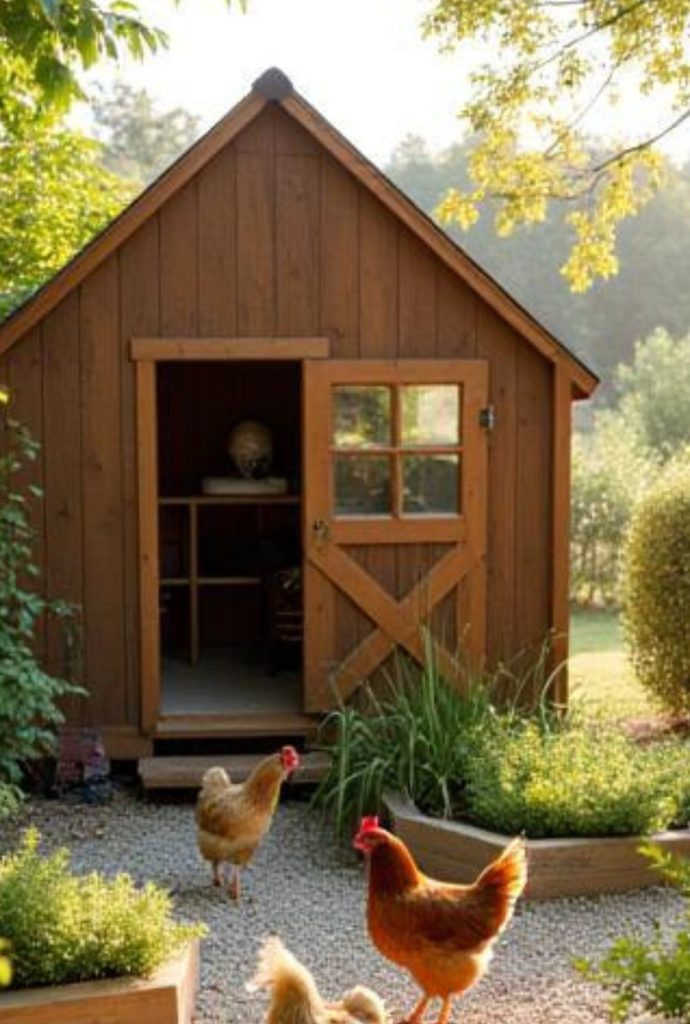
Chickens and gardens are natural partners. Chickens eat the pests that damage plants, fertilize the soil, scratch and aerate compacted ground, and provide endless compost material. Gardens provide chickens with food diversity, mental stimulation, and shelter. Here are 10 practical ideas for integrating your chickens into your food garden.
10 Chicken Garden Ideas
01/ The Autumn Garden Clear-Up
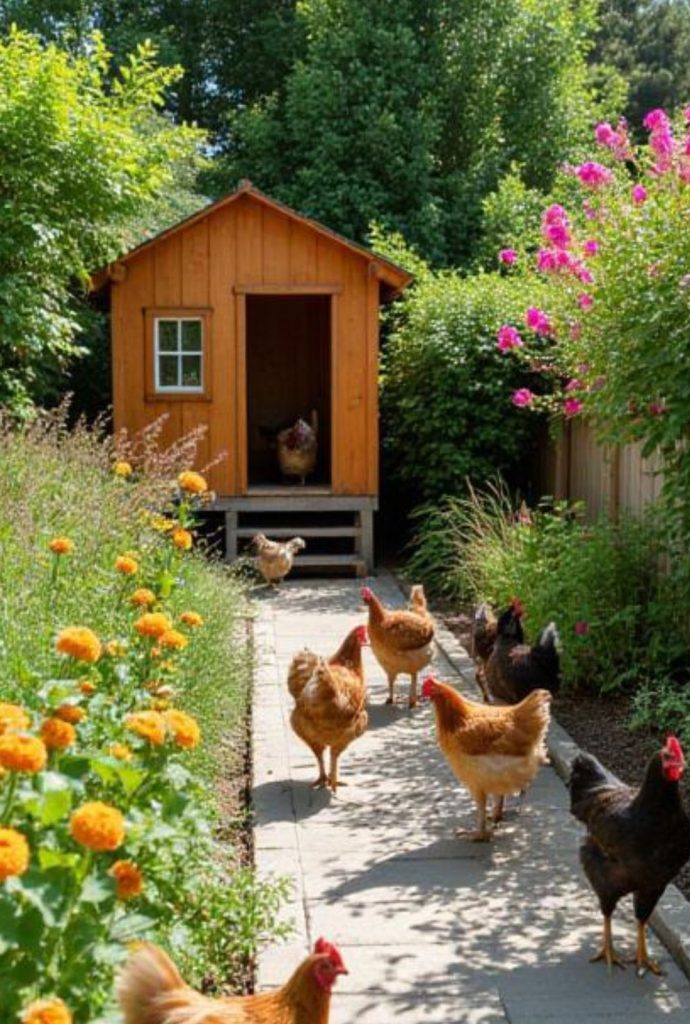
Release the flock into the vegetable garden after the main growing season ends. Chickens will eat every slug, snail, caterpillar egg, and weed seed in the beds. They scratch the soil, incorporating their droppings as fertilizer. The spring garden starts in far better condition.
02/ The Compost Chicken Run
Build the chicken run around or adjacent to the compost heap. Chickens scratch and turn the compost constantly, accelerating decomposition. They eat grubs and fly larvae from the heap, controlling pest populations. The most productive pairing in the backyard.
03/ The Chicken Pest Control Patrol
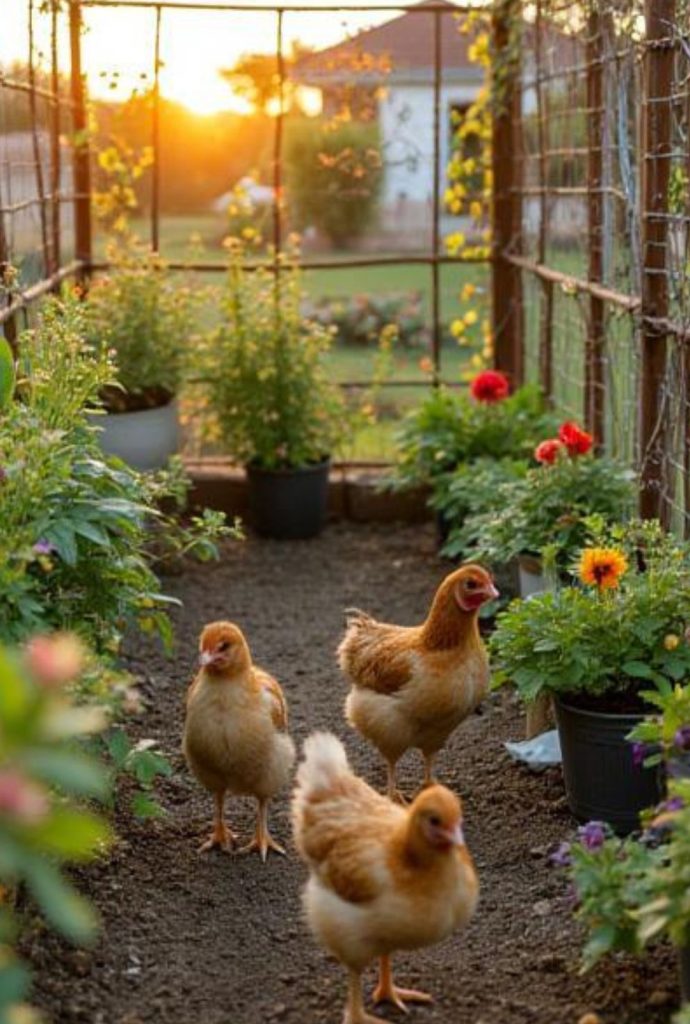
Release chickens into garden beds for 2-hour supervised sessions in spring and early summer when slugs, snails, and cutworms are active. One afternoon of free-ranging clears more pests than a week of manual control.
04/ The Three-Zone Garden Rotation
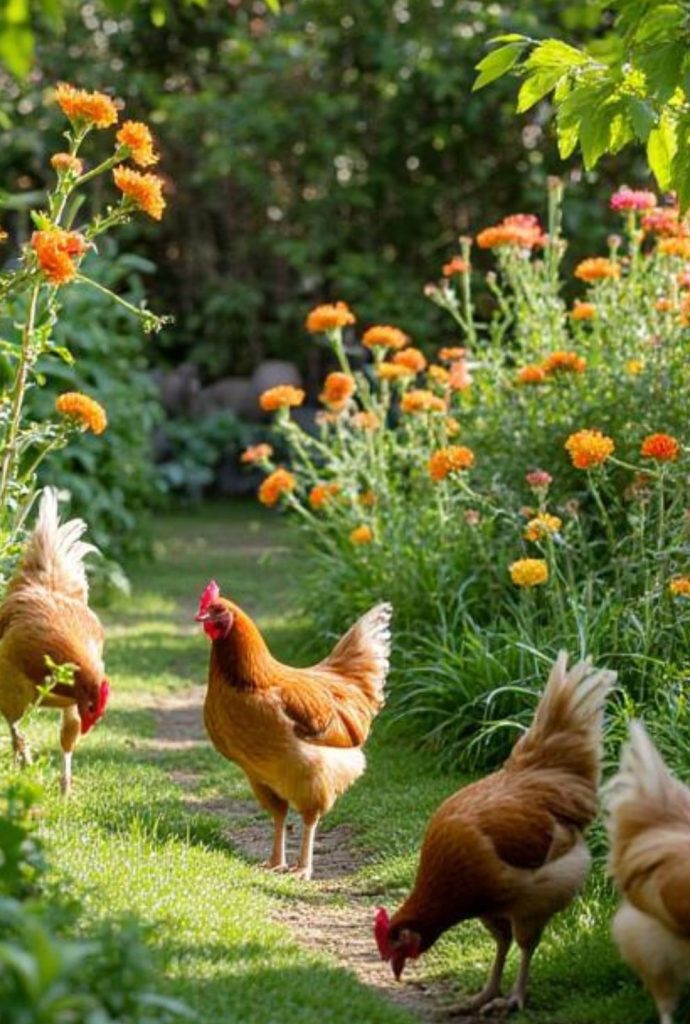
Divide the garden into three zones: one growing, one resting (covered with mulch), and one with the chickens actively working it. Rotate on a 3-week cycle. By the time a zone returns to planting, it has been fertilized, scratched, and cleaned.
05/ The Chicken Herb Spiral
Build a herb spiral — a raised spiral garden with different microhabitats from dry at the top to moist at the base — and position it inside or beside the chicken run. Hens self-medicate with herbs, and the planting looks beautiful. Protect young plants with a wire guard until established.
06/ The Berry Patch Border
Plant a row of gooseberries, currants, or thorny raspberries along the boundary of the chicken run. The thorny canes deter climbing predators. The berries drop directly into the run as an autumn treat. The manure from the run fertilizes the berry plants.
07/ The Chicken Salad Bar
Plant a small separate bed inside the run specifically for the flock. Hardy greens — kale, comfrey, nettles — planted thickly behind wire protect the roots while leaves grow through for the hens to peck. A living vitamin supplement that regrows continuously.

08/ The Fruit Tree Under-Planting
Keep chickens under established fruit trees. They eat fallen fruit (preventing rot and wasp problems), control aphids and other tree pests, and fertilize the root zone. The trees provide shade and shelter in the run. A genuinely symbiotic relationship.
09/ The Edible Hedgerow Run Perimeter
Plant the outside of the run with an edible hedgerow — elder, hazel, wild garlic, comfrey, and native berries. The hedge provides privacy screening, habitat for beneficial insects, and a constant source of chicken-accessible food as it grows through the fence.

10/ The Chicken Manure Composting System
Collect coop bedding and droppings in a dedicated compost system beside the garden. Age for 6 months before applying. Chicken manure is one of the most nitrogen-rich animal manures available and dramatically improves garden soil over several seasons.
Plants to Protect from Chickens
- Young seedlings of any kind — wait until plants are established before allowing access
- Strawberries — chickens will eat every ripe fruit
- Anything freshly planted — chickens scratch to investigate new additions
- Low-growing salad crops — protect with simple wire cloches
- Use poultry netting to create temporary exclusion zones within the garden
Frequently Asked Questions:
Will chickens destroy my garden?
Unsupervised access to a productive garden will result in significant damage. Supervised, time-limited access in the right seasons is extremely beneficial. Strategic integration with protection for vulnerable plants is the key.
What is the best garden configuration for chickens?
A permanent secure run adjacent to the garden, with gate access for controlled visits, is the most practical setup. The chickens can observe the garden (reducing boredom) and access it on your terms.
Are chicken droppings good for garden plants?
Yes, after composting. Fresh droppings are too high in nitrogen and may burn plants. Age in a compost pile for 6 months before applying as a soil amendment.