Baby Chick Care Guide: Everything You Need for the First 8 Weeks
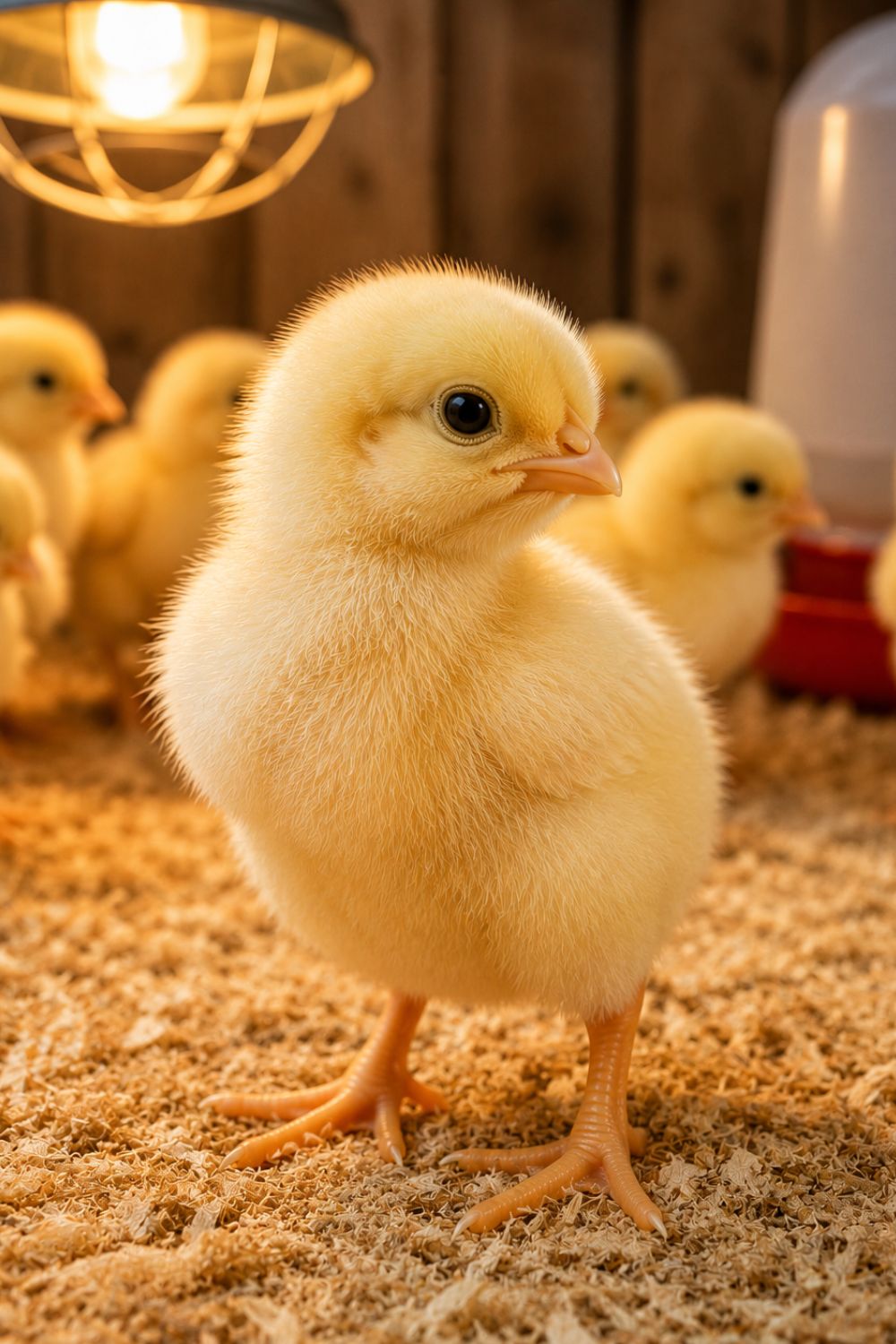
The first 8 weeks of a chick’s life are the most critical and the most intensive in terms of care requirements. Get this period right and you will raise healthy, confident chickens that become excellent layers. This complete guide covers every stage from day-old chicks to full feathering.
Week 1 to 2: Setting Up the Brooder
What You Need
| Item | Specification |
| Brooder box | Plastic tote, cardboard box, or wooden frame — at least 2.5 sq ft per chick |
| Heat source | Brooder plate preferred (safer than heat lamps), or 250W red heat lamp |
| Thermometer | Digital with probe to verify temperature at chick level |
| Bedding | Fine wood shavings or paper towels for first 3 days |
| Chick feeder | Small chick-specific feeder — fill with chick crumble |
| Chick waterer | Small waterer — add marbles to prevent drowning for very young chicks |
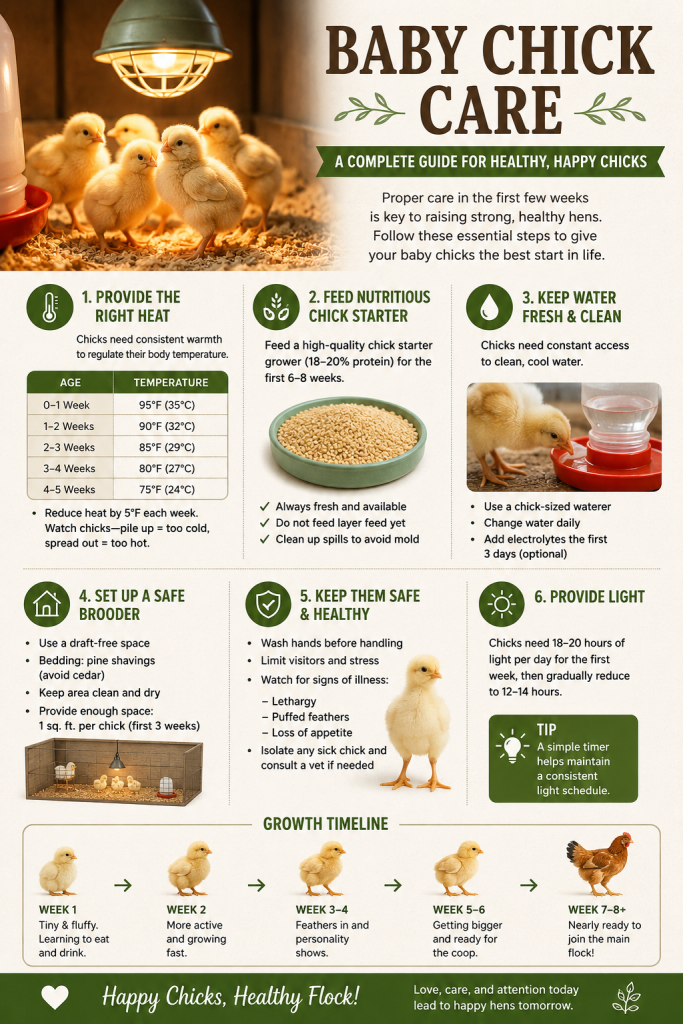
Temperature Guide by Week
| Week | Temperature at Chick Level | What to Look For |
| Week 1 | 95 degrees F (35 C) | Chicks spread out evenly — correct temperature |
| Week 2 | 90 degrees F (32 C) | Chicks huddled under heat — too cold |
| Week 3 | 85 degrees F (29 C) | Chicks as far from heat as possible — too hot |
| Week 4 | 80 degrees F (27 C) | Panting chicks — dangerously hot |
| Week 5 to 6 | 75 degrees F (24 C) | Observe and adjust daily |
| Week 7 to 8 | 65 to 70 degrees F (18 to 21 C) | Preparing for outdoor transition |
Feeding Baby Chicks
Feed chick starter crumble from day one through 8 weeks. Chick starter contains 18 to 20% protein — much higher than adult layer feed. Never feed layer pellets to chicks under 18 weeks as the calcium content damages developing kidneys.
- Provide fresh water at all times — chicks dehydrate very quickly
- No treats for the first 3 weeks — their digestive systems need time to develop
- After 3 weeks, provide insoluble grit separately if feeding anything other than commercial crumble
- After 8 weeks, transition gradually to grower or pullet feed (16% protein)
Week 3 to 6: Growth and Feathering
During this period chicks are growing rapidly and developing their adult feathers. The brooder needs to grow with them — plan for 3 to 4 square feet per chick by week 6. Begin reducing heat by 5 degrees per week.
- Add perching opportunities — a small dowel or twig at 3 to 4 inches high encourages natural roosting behavior
- Supervised outdoor time in warm weather (above 65 F) can begin week 4 to 5
- Introduce gentle handling daily to develop human-friendly temperaments
- Watch for pasting up (droppings stuck to vent area) — gently clean with warm water and a cotton ball
Week 6 to 8: Transitioning to the Coop
Fully feathered chicks (typically at 6 to 8 weeks) are ready to move outside if temperatures are above 50 F at night. The transition process:
- Move the brooder to the coop for 3 to 5 days so chicks become familiar with the environment
- Allow daytime outdoor run access with supervision starting week 6
- Remove supplemental heat once chicks are fully feathered and nights are consistently above 50 F
- If integrating with an existing flock, see flock integration protocol
Common Health Issues in Baby Chicks
Pasty Butt
Droppings stuck to the vent area. Clean gently with warm wet cotton. Caused by temperature stress or diet issues. Very common in shipped chicks during the first week.
Splayed Leg
Legs splipping to the sides — caused by slippery flooring in the brooder. Treat immediately by gently binding the legs to correct position with a small bandage. Resolve by providing textured bedding.
Respiratory Issues
Wheezing or nasal discharge. Check brooder ventilation and temperature. Marek’s disease vaccination (available at hatcheries) is strongly recommended for all new chicks.
- Keep a first aid kit stocked before your chicks arrive
Frequently Asked Questions:
How long do baby chicks need a heat lamp?
Until they are fully feathered, typically 6 to 8 weeks old. The schedule is: 95 F at week 1, reduce by 5 degrees each week.
When can baby chicks go outside?
Fully feathered chicks (6 to 8 weeks) can go outside on warm days. Night temperatures below 50 F require supplemental heat until week 8 to 10.
Can I put baby chicks with adult chickens?
No, not until they are close to adult size (14 to 16 weeks minimum). Adult hens will attack young chicks. Introduce through a wire barrier for 1 to 2 weeks before direct contact.