10 Best Chicken Coop Designs for Every Flock Size
Choosing the right chicken coop design is the most important decision you will make for your flock. The design determines how easy the coop is to clean, how safe your hens are from predators, how well they handle winter and summer extremes, and how long the coop will last.
This guide covers the 10 most popular and practical chicken coop designs, with dimensions, ideal flock sizes, and honest pros and cons for each.
| Design | Best For | Flock Size | Build Difficulty |
| A-Frame Tractor | Small urban yards, moving flock | 3 to 5 hens | Easy |
| Classic Barn Style | Traditional backyard setting | 6 to 12 hens | Medium |
| Walk-In Coop | Large flocks, easy keeper access | 12+ hens | Medium-Hard |
| Pallet Coop | Budget builds, beginners | 4 to 8 hens | Easy |
| Shed Conversion | Quick setup, existing structure | 6 to 20 hens | Easy |
| Two-Story Raised | Small footprint, predator safety | 4 to 8 hens | Medium |
| Greenhouse Style | Winter egg production | 6 to 12 hens | Medium |
| Lean-To | Space saving, existing wall | 4 to 8 hens | Easy |
| Modular Expandable | Growing flock | 4 to 20+ hens | Medium |
| Modern Flat-Roof | Urban aesthetic-focused | 4 to 8 hens | Medium-Hard |
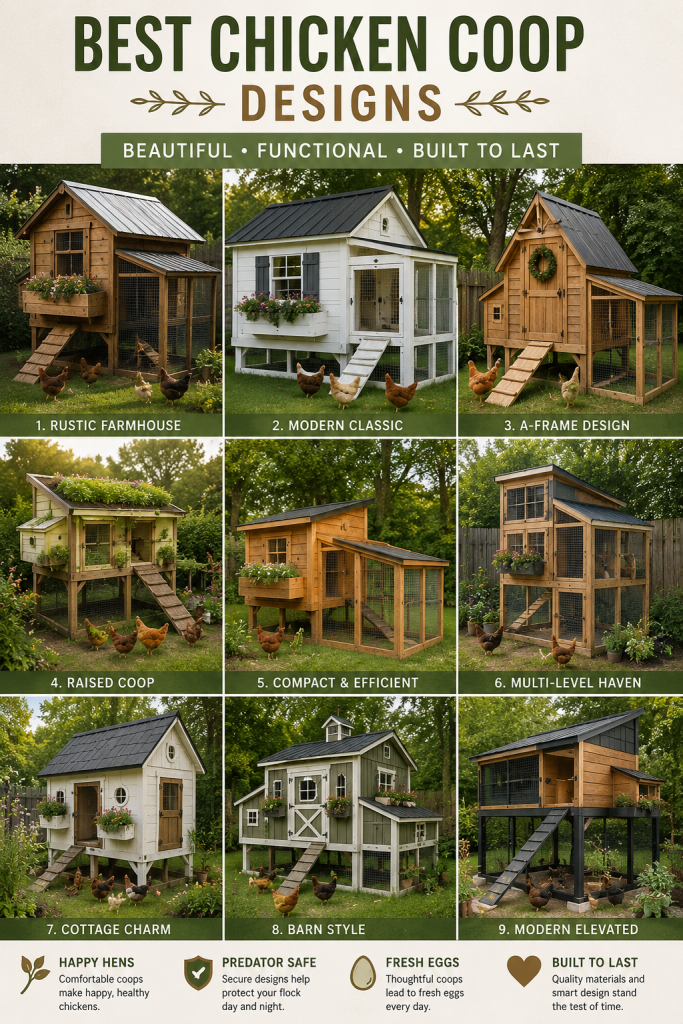
Design 1: The A-Frame Tractor Coop
The A-frame tractor is one of the most popular designs for small backyards and urban chicken keeping. The triangular profile is self-bracing, requiring less lumber than box-frame designs. Wheels at one end allow one person to move it across the yard, giving chickens fresh pasture every few days.
- Dimensions: 8 feet long x 4 feet wide x 4 feet tall at peak
- Ideal for: 3 to 4 standard hens or 5 to 6 bantams
- Best features: portable, natural lawn fertilization, no permanent installation
- Limitation: not suitable as a permanent fixture for larger flocks
Design 2: Classic Barn Style
The gambrel-roofed barn style is the most iconic chicken coop design. The steeply pitched roof creates extra head space inside and sheds rain and snow efficiently. Traditionally painted red with white trim, though any color works. The gambrel profile also creates a natural loft space that can be used for hay or feed storage.
- Dimensions: 6×8 to 8×10 feet standard
- Ideal for: 6 to 12 standard hens
- Best features: classic aesthetic, excellent weather resistance, extra storage loft
- Limitation: more complex roof construction than simple gabled designs
Design 3: Walk-In Coop
The walk-in coop is the preferred design for serious chicken keepers. Full standing height inside makes daily egg collection, cleaning, and health monitoring comfortable. Attach a large enclosed run directly to the coop for a complete system. The most expensive to build, but the most practical for long-term keeping.
- Dimensions: 8×10 to 10×12 feet minimum
- Ideal for: 12 to 20+ hens
- Best features: comfortable keeper access, easy cleaning, space for equipment storage
- Limitation: requires more space and materials
Design 4: Pallet Coop
The pallet coop is the entry point for budget-conscious chicken keepers. Shipping pallets create a surprisingly sturdy frame when properly assembled and secured. Add hardware cloth to openings, a metal roof, and a coat of exterior paint for a coop that looks intentional and lasts for years.
- Typical cost: $50 to $150 in materials
- Ideal for: 4 to 8 hens
- Best features: very affordable, widely available materials, beginner-friendly build
- Limitation: pallets vary in quality and wood type — avoid chemically treated pallets
Key Design Principles That Apply to Every Style
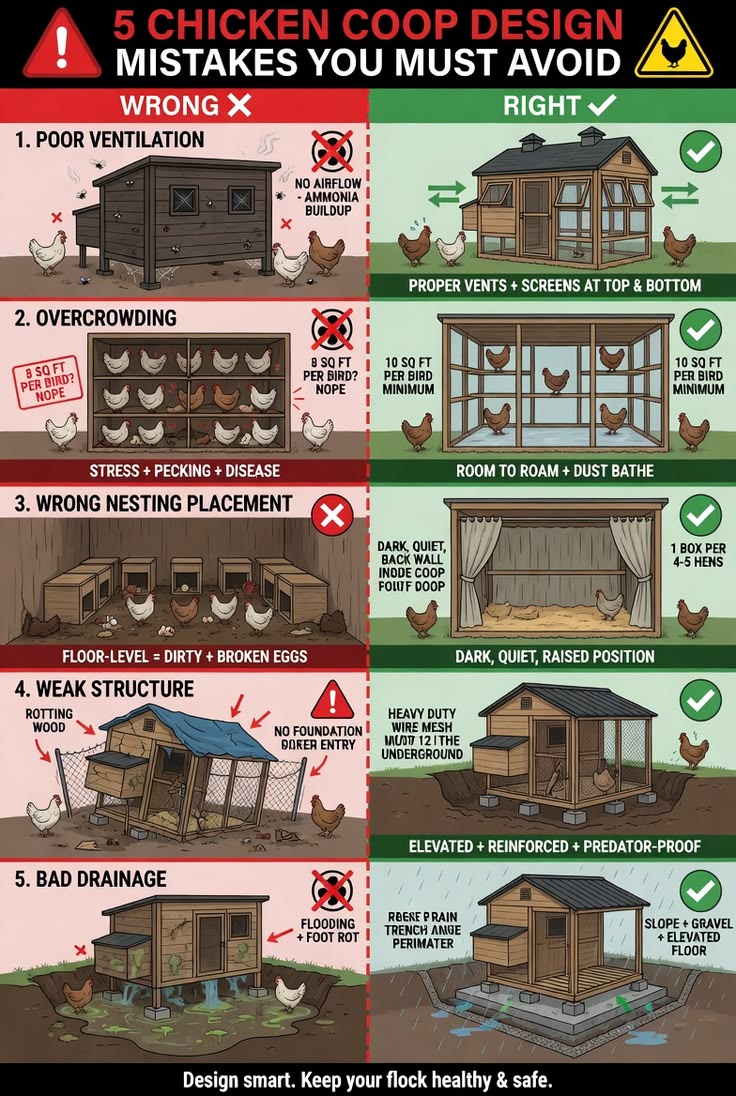
- Ventilation: install openings near the roofline on all four walls — at least 1 sq ft per 10 sq ft of floor area
- Predator proofing: hardware cloth on all openings and a raccoon-proof latch on every door
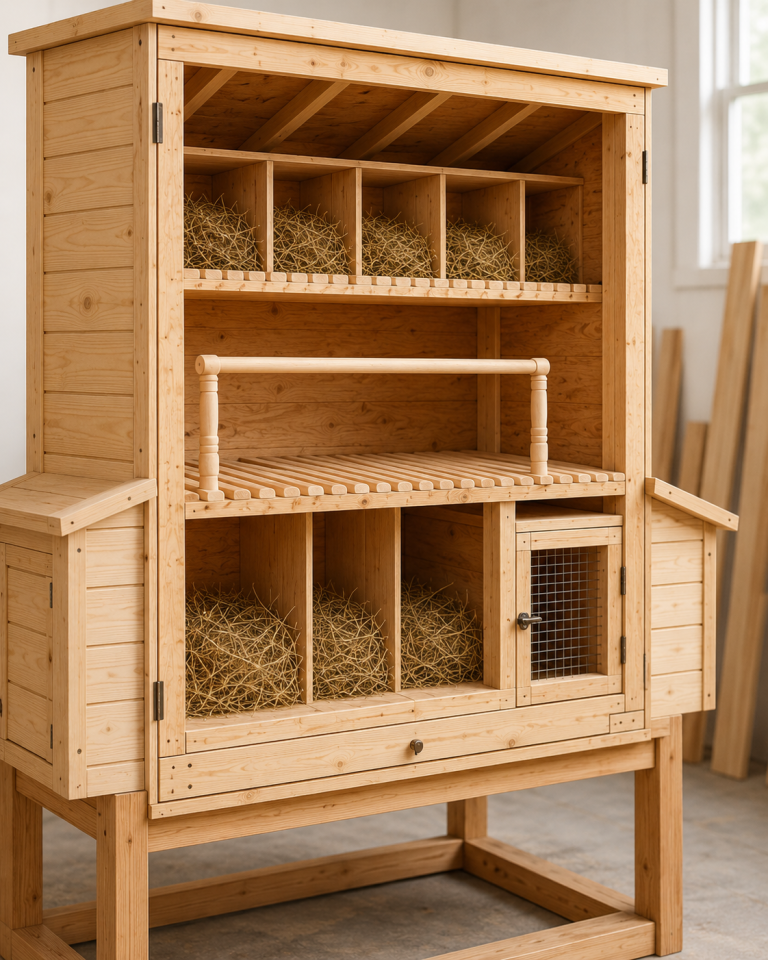
- Roosting bars: one-inch diameter, 12 to 15 inches of bar per hen
- Nesting boxes: one box per 3 to 4 hens, positioned lower than roosting bars
- Clean-out access: hinged roof, side doors, or removable floor panels
Frequently Asked Questions:
What is the best chicken coop design for beginners?
The shed conversion or basic box coop are the easiest starting points. Both require minimal carpentry skills and can be completed in a weekend with basic tools.
What direction should a chicken coop face?
Face the primary ventilation and window openings south in the northern hemisphere to maximize winter sunlight. Position the door on the south or east side to give morning sun access.
How often does a chicken coop need replacing?
A well-built coop using quality materials lasts 10 to 20 years. Pressure-treated framing, galvanized hardware, and painted or cedar exterior cladding all extend lifespan significantly.