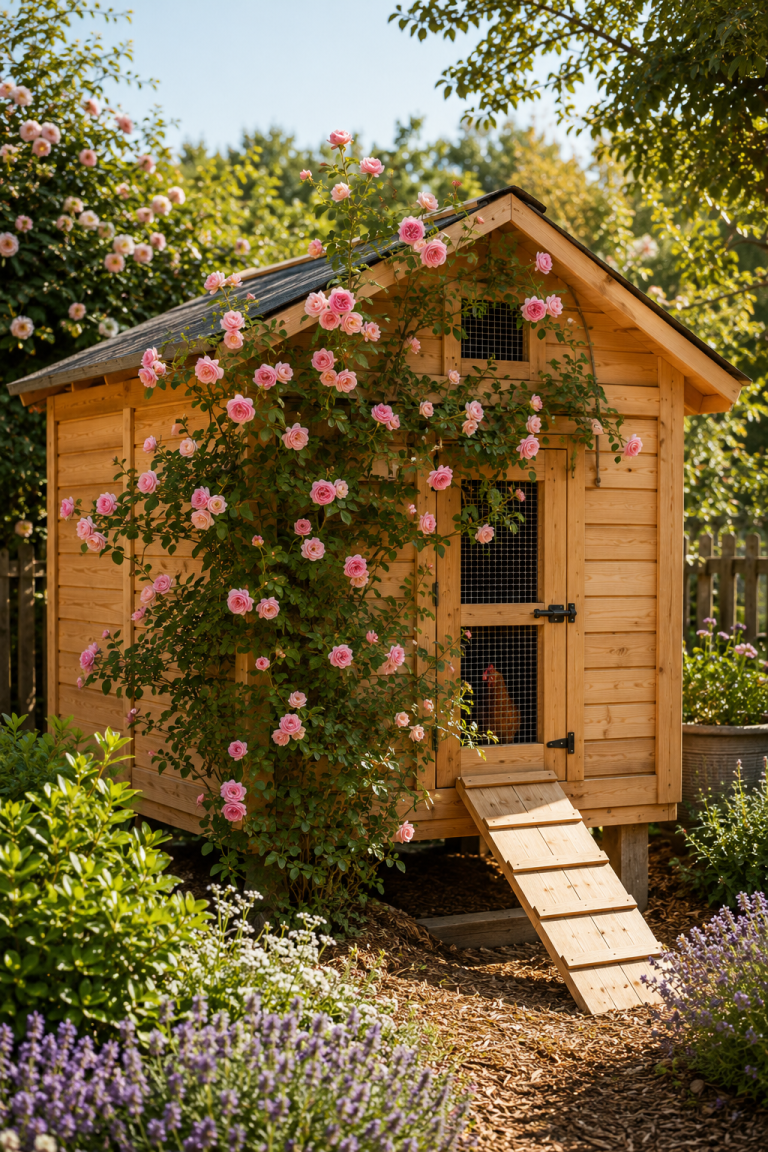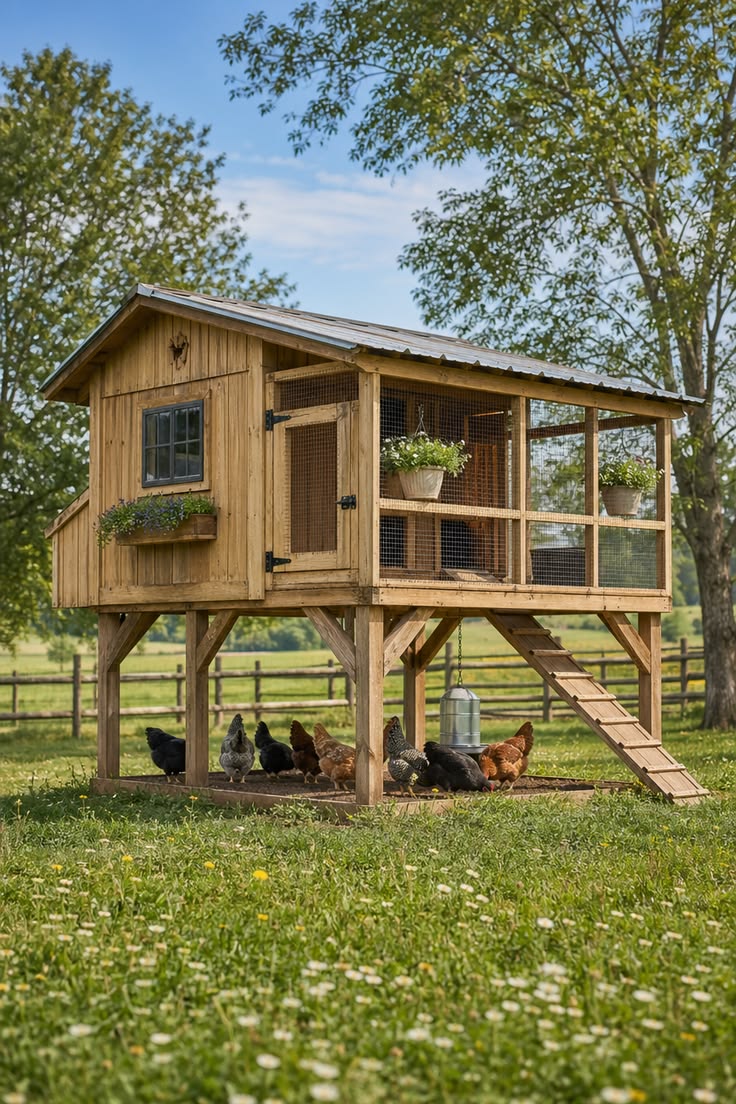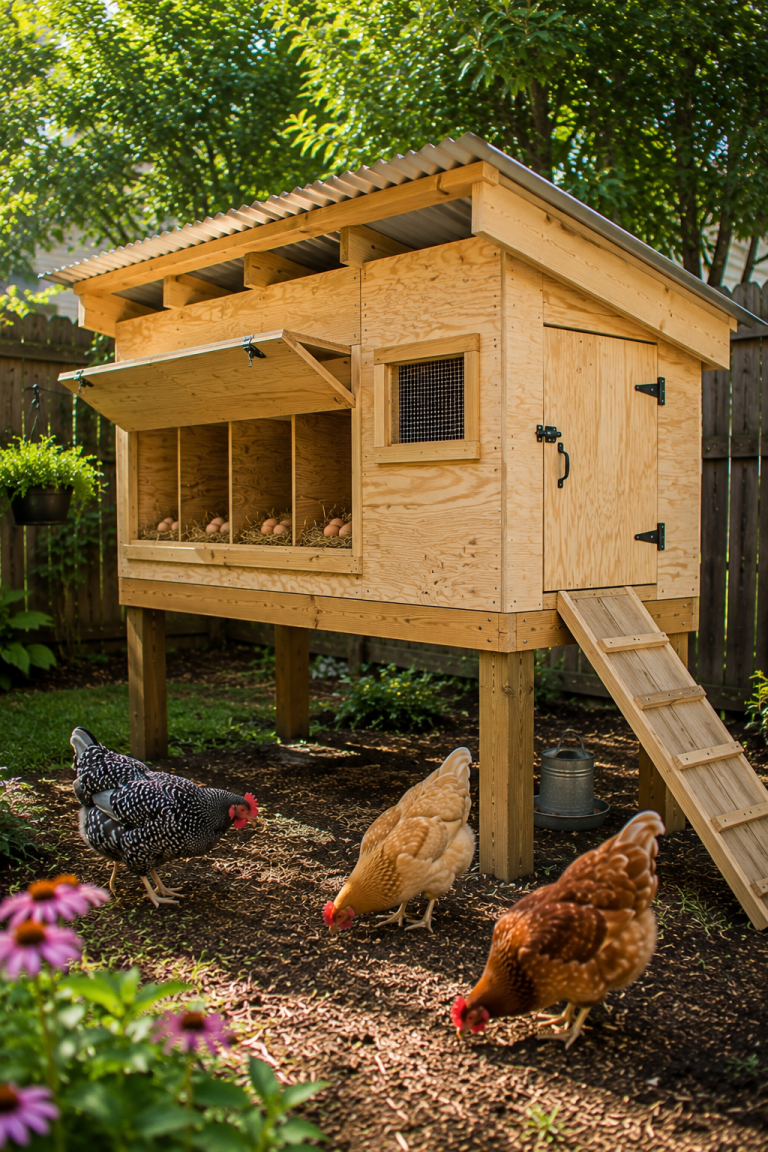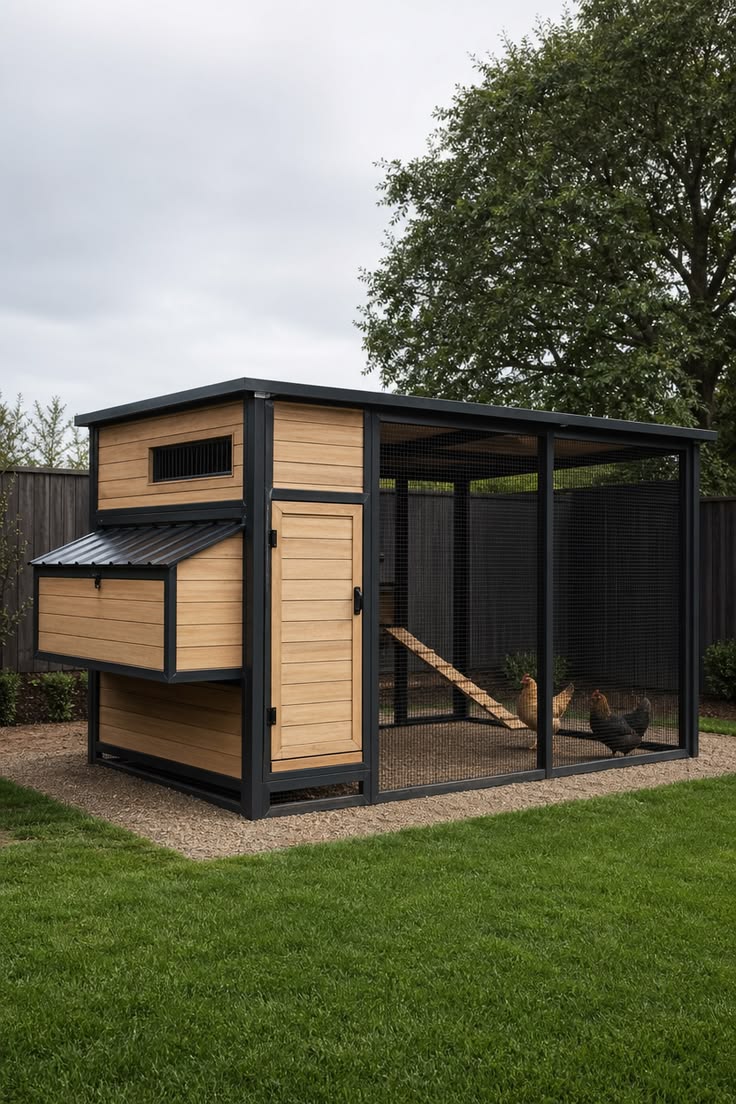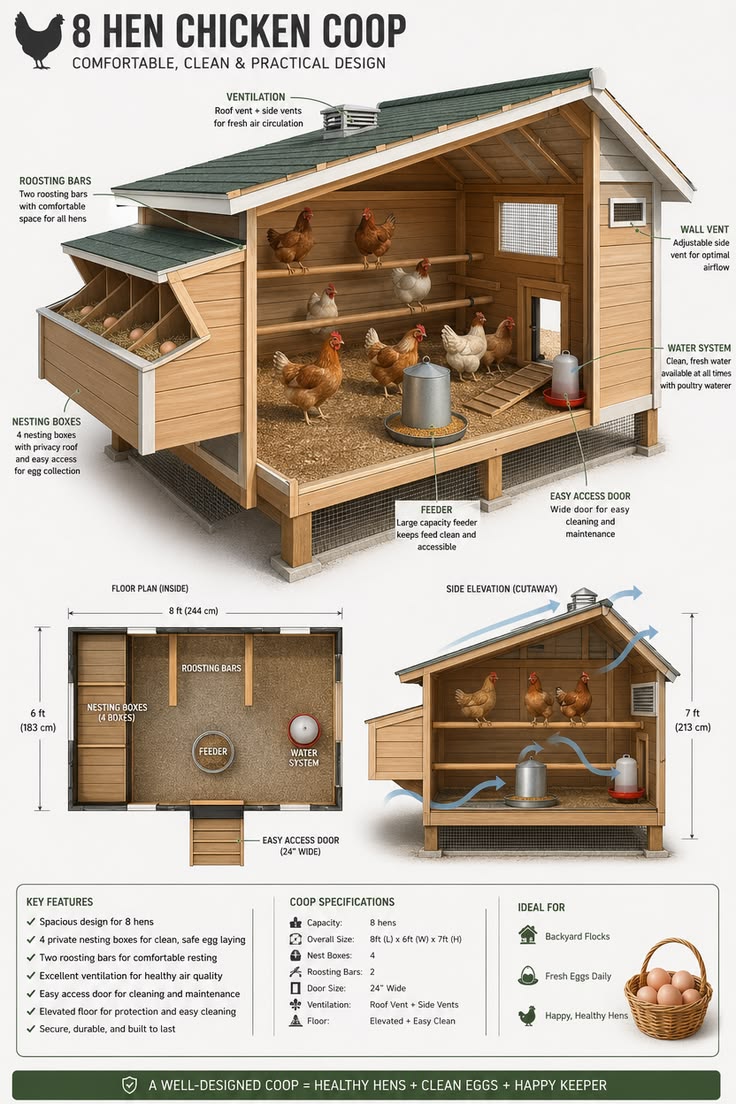
5 Chicken Run Ideas for a Safe, Spacious & Predator-Resistant Backyard
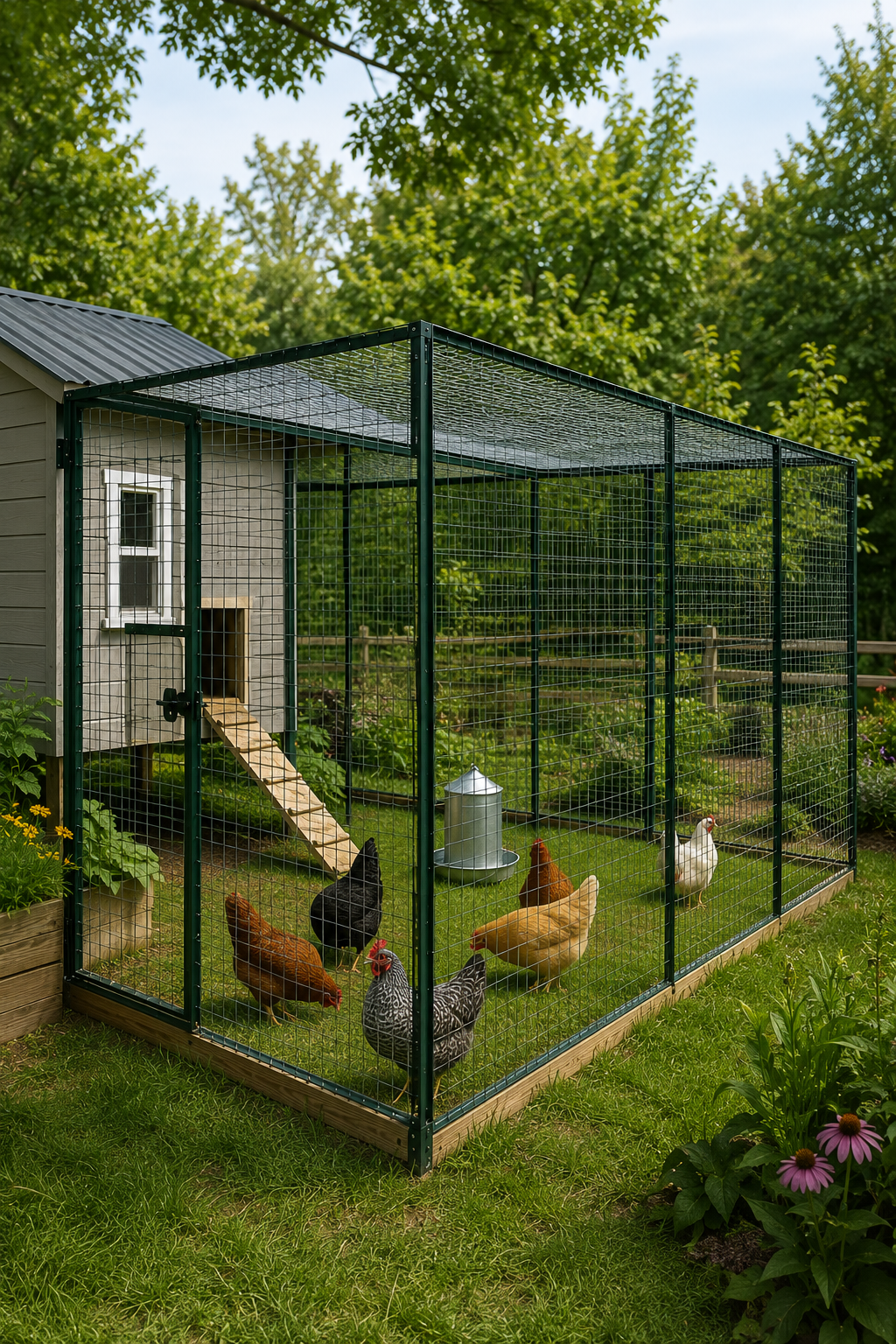
A well-designed chicken run gives your flock a safe place to stretch their legs, scratch, forage, dust bathe, and enjoy fresh air without having unrestricted access to your entire backyard. The best chicken run ideas balance three things: safety, usable space, and convenience for the person caring for the birds.
You don’t need a huge budget or a complicated structure to create a useful chicken run. A simple framed enclosure can work beautifully when it has secure fencing, a suitable roof or cover, good drainage, shade, and easy access for cleaning and feeding.
Predator protection should be a major consideration. Penn State Extension recommends covering outdoor runs and securing the lower perimeter against animals that may dig underneath. It also recommends using small mesh where necessary to reduce access by predators and wild animals.
In this guide, we’ll look at five chicken run ideas that you can adapt to different backyard sizes and budgets. Each design includes practical details so you can understand how it works and what you’ll need to build something similar.
What Makes a Good Chicken Run?
Before choosing between different chicken run ideas, think about what your chickens will actually do inside the space.
A useful run should provide enough room for normal movement while giving the birds access to food, water, shade, and areas where they can scratch and explore.
The structure should also protect them from weather and predators. Penn State Extension notes that outdoor runs can be made safer by covering them and securing the perimeter so predators cannot easily dig underneath.
There are several features worth considering:
- Strong framing
- Secure mesh
- A covered section
- Good drainage
- Shade
- Easy-access doors
- Safe feeding and watering areas
- Predator-resistant lower edges
- Enough space for the flock
- A surface that can be cleaned or refreshed
The right combination will depend on your climate, backyard, flock size, and the predators common in your area.
1. Covered Chicken Run for Year-Round Protection
One of the most practical chicken run ideas is a fully or partially covered run attached directly to the coop.
Instead of leaving the entire outdoor area exposed, build a framed enclosure with mesh walls and a solid or weather-resistant roof over at least part of the run.
This design is especially useful if your backyard receives frequent rain or strong summer sunlight.


Why a covered run works
A roof gives chickens a dry area during wet weather and provides shade when the sun is strong.
It also offers another layer of protection from aerial predators. Penn State Extension specifically recommends covering outdoor runs with mesh wire or netting to help protect poultry from hawks and owls.
You don’t necessarily need a solid roof over every square foot.
A combination can work well:
Solid roof → shade and rain protection
Mesh-covered section → sunlight and airflow
This creates different areas that chickens can use throughout the day.
How to build it
Start with a sturdy wooden frame connected to the coop.
Attach appropriate mesh securely to the sides. For areas where predators may reach through or attempt to enter, use appropriately sized hardware cloth rather than relying on lightweight chicken wire alone.
UMN Extension’s mobile poultry-hut design, for example, uses hardware cloth on the lower portion because it provides stronger protection there, while lighter poultry netting can be used in upper areas for specific purposes.
For the roof, you can use:
- Corrugated roofing
- Metal roofing
- Polycarbonate panels
- Outdoor roofing sheets
- A combination of solid roofing and mesh
Add a shaded resting area
Don’t make the entire run a sun trap.
Trees, shade cloth, roofing, or strategically positioned panels can give chickens somewhere cooler to retreat.
This is particularly important in hot weather because poultry can experience heat stress as temperature and humidity rise. Adequate airflow, shade, and access to cool, fresh water are important management measures.
Best for
Backyards with rain, hot summers, or aerial-predator concerns.
2. Walk-In Chicken Run for Easy Cleaning
If you have enough backyard space, a walk-in run can make chicken keeping considerably easier.
Instead of creating a low enclosure that requires you to bend down or reach through a small door, build the run tall enough for an adult to comfortably enter.
This is one of the chicken run ideas worth considering if you plan to keep chickens for many years.


Why walk-in designs are practical
Think about all the things you’ll eventually need to do inside the run:
- Clean bedding
- Refill feeders
- Refill waterers
- Inspect chickens
- Collect dropped eggs
- Remove damaged materials
- Add enrichment
- Repair fencing
- Rearrange equipment
A tiny run door makes these jobs frustrating.
A walk-in design allows you to stand comfortably while doing routine maintenance.
UMN Extension’s mobile poultry-hut design highlights the practical advantage of a structure tall enough for comfortable access to birds, feeders, and waterers.
Create a service door
Install a proper human-sized door with strong hinges and a secure latch.
The door should open wide enough that you can carry a bucket, feed container, or cleaning tools inside.
You can also install a smaller chicken door between the coop and run.
Make cleaning easier
Avoid creating unnecessary corners where bedding and manure can accumulate.
A relatively open layout makes it easier to sweep, rake, shovel, or refresh the run surface.
You can also place feeders and waterers where they’re accessible from the main door.
Add a covered section
A walk-in run becomes even more useful when part of the roof is solid.
This creates a sheltered area where chickens can stay during rain while still giving them access to fresh air and outdoor light.
Best for
Medium and large backyards, larger flocks, and chicken keepers who prioritize easy maintenance.
3. Small Chicken Run for a Compact Backyard
Not everyone has a large backyard.
Fortunately, a small flock can still benefit from a thoughtfully designed outdoor enclosure.
The trick with small chicken run ideas is to use the available space efficiently rather than simply building the smallest possible box.


Use vertical space carefully
A compact run doesn’t have to be visually boring.
You can add:
- Low perches
- Safe ramps
- Logs
- Dust-bath areas
- Hanging enrichment
- Sheltered corners
- Elevated platforms
These features give chickens more things to explore without requiring a huge footprint.
However, don’t overcrowd the enclosure. Chickens still need adequate floor space to move naturally.
Attach the run directly to the coop
A connected design is usually easier than creating a separate enclosure.
The chickens can move directly between their sleeping area and outdoor space.
A small run can extend from the side or front of the coop.
Make it feel larger
Use different levels and areas rather than putting everything in one corner.
For example:
Corner 1: Waterer
Corner 2: Dust bath
Center: Open scratching area
Side: Shade
Upper area: Safe perch
This gives the flock several things to do without requiring a massive structure.
Protect the ground
Small runs can become muddy quickly because chickens repeatedly walk and scratch the same area.
Choose a location with good drainage and consider adding suitable ground materials to improve the surface.
Avoid allowing water to pool directly around the coop entrance.
Predator protection is even more important
Because a small run is usually close to fences, gardens, sheds, or other structures, think about how predators might approach it.
Secure the perimeter rather than assuming a tall fence alone is enough.
Penn State Extension recommends burying wire around the run perimeter and extending it outward to discourage predators from digging underneath.
Best for
Small backyards, suburban properties, and small chicken flocks.
4. Predator-Proof Chicken Run With a Dig-Proof Perimeter
If you’re concerned about foxes, raccoons, dogs, or other animals, predator protection should be built into the run from the beginning.
This is one of the most important chicken run ideas because a beautiful enclosure isn’t useful if a predator can simply dig underneath it.


Start with the lower perimeter
A common mistake is securing only the vertical walls.
A determined predator may attack the weakest point at ground level.
Penn State Extension recommends burying wire along the run border and turning part of it outward to create a barrier against digging predators.
You can build this as a buried barrier or an outward-facing apron.
Why an apron helps
Imagine the fence extending outward along the ground instead of ending exactly at the wall.
A digging predator reaches the barrier and encounters additional fencing.
This makes it much more difficult to dig directly underneath the wall.
Use appropriate mesh
Chicken wire can be useful for some applications, but it shouldn’t automatically be treated as a complete predator barrier.
For vulnerable lower sections, stronger hardware cloth with appropriately small openings can provide better protection.
UMN Extension’s mobile poultry structure similarly places hardware cloth on the lower portion while using lighter poultry wire in upper sections for specific purposes.
Secure the doors
Don’t overlook the entrance.
Use sturdy latches and make sure there are no large gaps around the door frame.
A run is only as secure as its weakest opening.
Cover the top
A roof or strong mesh covering can help protect chickens from aerial predators.
Penn State Extension recommends covering outdoor runs with mesh wire or netting for protection from hawks and owls.
Check the run regularly
Walk around the entire perimeter occasionally.
Look for:
- Loose mesh
- Rusted wire
- Gaps
- Damaged fasteners
- Digging
- Weak door hinges
- Broken roofing
- Openings near the ground
A small repair today can prevent a much larger problem later.
Best for
Areas with significant predator activity or anyone who wants security to be the main priority.
5. Mobile Chicken Run or Chicken Tractor
A mobile chicken run gives you the ability to move your flock to fresh ground rather than keeping them in exactly the same location.
This type of enclosure is commonly known as a chicken tractor when it combines housing and a movable outdoor structure.
It’s one of the more flexible chicken run ideas, especially if you have enough yard or pasture to rotate the enclosure.


Why choose a mobile design?
Chickens naturally scratch and forage.
If they’re kept on one small piece of ground continuously, the area can become worn and heavily soiled.
A mobile run lets you move them periodically.
Penn State Extension notes that mobile poultry systems need sufficient space for movement and that management frequency depends on the condition of the pasture and flock.
Basic design
A simple mobile run can have:
- Lightweight framing
- Mesh sides
- A covered section
- Wheels or handles
- Chicken access door
- Feeder
- Waterer
- Secure latches
Make sure the structure is light enough to move but strong enough to stay secure.
Make feeding easier
One useful feature of mobile designs is that feeders and waterers can be attached or hung within the structure.
UMN Extension’s mobile poultry-hut design specifically notes that feeders and waterers can be hung from the structure and moved with the unit.
Think about shade
A mobile run should have a shaded area.
If you move it throughout the day, make sure the chickens aren’t left exposed to intense direct sunlight without somewhere to retreat.
Don’t move too aggressively
Check the ground before moving the enclosure.
You don’t want to trap or injure chickens underneath the frame.
Move slowly and observe the flock.
Best for
Larger yards, gardens, pasture areas, and chicken keepers who want to rotate their flock’s outdoor space.
How to Choose Between These Chicken Run Ideas?
The best design depends on what you’re trying to solve.
| Run Design | Best For | Main Benefit |
|---|---|---|
| Covered run | Rain & heat | Weather protection |
| Walk-in run | Easy maintenance | Comfortable access |
| Small compact run | Limited space | Efficient footprint |
| Predator-resistant run | High predator risk | Better security |
| Mobile run | Large yards | Fresh ground |
You don’t necessarily have to choose just one.
For example, you could combine a walk-in run + covered roof + predator-resistant perimeter.
Or combine a small run + covered section + secure hardware-cloth base.
The best design is usually the one that solves the specific problems in your backyard.
How to Build a Better Chicken Run?
Regardless of which design you choose, several basic construction principles apply.
Choose a Well-Drained Location
Don’t build the run in a low area where rainwater naturally collects.
A wet environment can quickly become muddy and unpleasant.
A slightly elevated, well-drained location is generally easier to maintain. Penn State Extension recommends locating poultry housing on high, well-drained areas to reduce prolonged dampness.
Provide Shade and Airflow
Chickens need protection from excessive heat.
A covered area can provide shade, while open or mesh sections allow airflow.
Don’t completely seal the run unless there is a specific reason and adequate ventilation has been designed into the structure.
Good airflow is particularly important during hot weather. UMN Extension identifies ventilation and shade as important measures for helping poultry cope with heat stress.
Make the Run Easy to Access
Even a small run should have a practical access point.
You’ll need to get inside to:
- Clean
- Inspect chickens
- Replace bedding
- Repair fencing
- Move equipment
- Collect eggs
- Handle an injured bird
If you can comfortably access the run, routine chicken care becomes much easier.
Keep Feed and Water Protected
Feed and water should be positioned where chickens can access them easily without constantly contaminating them with bedding or dirt.
Hanging or elevated feeders can help reduce contamination and waste. UMN Extension describes hanging feeder designs as one way to reduce contamination and feed waste.
The same principle applies to water: choose a location that stays reasonably clean and doesn’t turn the surrounding ground into a wet patch.
Simple Chicken Run Layout You Can Copy
If you’re building a run from scratch and don’t know where to start, here’s a simple layout.
Back
Covered shelter
Place the solid roof over part of the run.
Middle
Open activity area
Leave enough room for scratching, walking, and exploring.
One side
Feeder + waterer
Keep these away from the wettest part of the enclosure.
Corner
Dust bath
Create a dry area where chickens can bathe.
Perimeter
Predator-resistant fencing
Secure the lower section and consider a buried or outward-facing apron.
Entrance
Large human access door
Make cleaning and maintenance easier.
This basic layout can be adapted to almost any of the five designs above.
Chicken Run Ideas for Different Backyard Sizes
Small backyard
Choose a compact run attached directly to the coop.
Focus on vertical enrichment, shade, good drainage, and efficient equipment placement.
Medium backyard
A covered walk-in run can provide a good balance between space and convenience.
Large backyard
Consider a mobile run or chicken tractor so you can rotate the birds between different areas.
Predator-heavy area
Prioritize secure mesh, a protected perimeter, a covered top, strong doors, and regular inspections.
Final Thoughts
The best chicken run ideas are not necessarily the biggest or most expensive ones.
A successful run should give chickens enough room to move, scratch, forage, and rest while protecting them from weather and predators. It should also make your own job easier by providing convenient access to food, water, cleaning areas, and the birds themselves.
If you have limited space, start with a compact enclosed run and use the available area carefully. If maintenance is your biggest concern, a walk-in design can make a huge difference. If predators are your primary concern, invest more effort in the fencing, roof, and ground-level protection.
And if you have plenty of outdoor space, a mobile chicken run can give your flock access to fresh areas while making the most of your property.
Before building, sketch the layout on paper and think about how you’ll use the run every day—not just how it will look in a Pinterest photo.
A beautiful run is great, but a safe, practical, and easy-to-maintain chicken run is what you’ll appreciate most after your chickens move in.
Frequently Asked Questions
How big should a chicken run be?
The appropriate size depends on flock size, breed, local conditions, and how much time the chickens spend outside the run. Avoid designing only for the current flock if you expect to add birds later.
Should a chicken run have a roof?
A roof or covered section can provide shade and protection from rain. Covering the run can also help protect birds from aerial predators.
What is the best fencing for a chicken run?
The appropriate fencing depends on the predators and purpose of the enclosure. For vulnerable lower sections, stronger hardware cloth with appropriately small openings is often preferable to lightweight chicken wire.
How do I stop predators from digging under a chicken run?
One approach is to bury fencing along the perimeter or create an outward-facing wire apron. Penn State Extension recommends burying the wire and extending part of it outward to discourage digging predators.
Can I build a chicken run in a small backyard?
Yes. A compact run can work when the layout is carefully planned. Focus on efficient use of space, drainage, shade, security, and easy access.
Is a mobile chicken run worth it?
A mobile run can be useful if you have enough property to move it regularly. It allows chickens to access fresh ground and can help distribute their impact across a larger area.