How to Raise Backyard Chickens: The Complete Beginner’s Guide

Raising backyard chickens is one of the most rewarding things you can add to your home life. Fresh eggs every day, natural pest control, garden fertilizer, and genuinely entertaining companions — chickens deliver all of this and more. This complete beginner’s guide walks you through everything you need to know from the very first decision to your first egg.
Before You Start: The Checklist
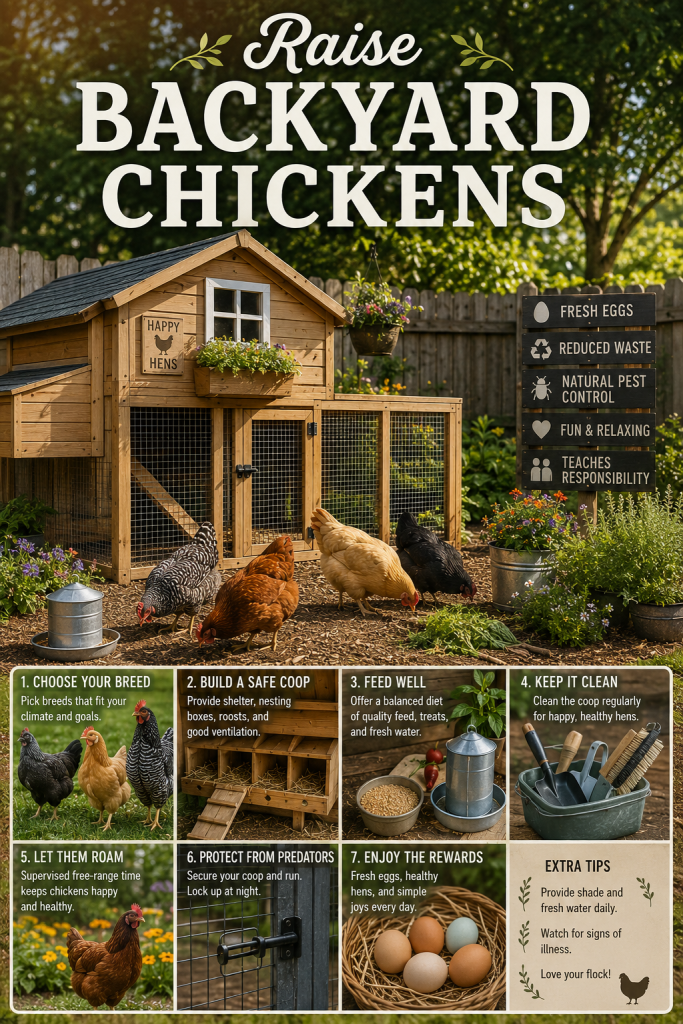
- Check local zoning laws — many municipalities allow 3 to 6 hens with no rooster
- Decide your flock size — 4 to 6 hens is the ideal starting number
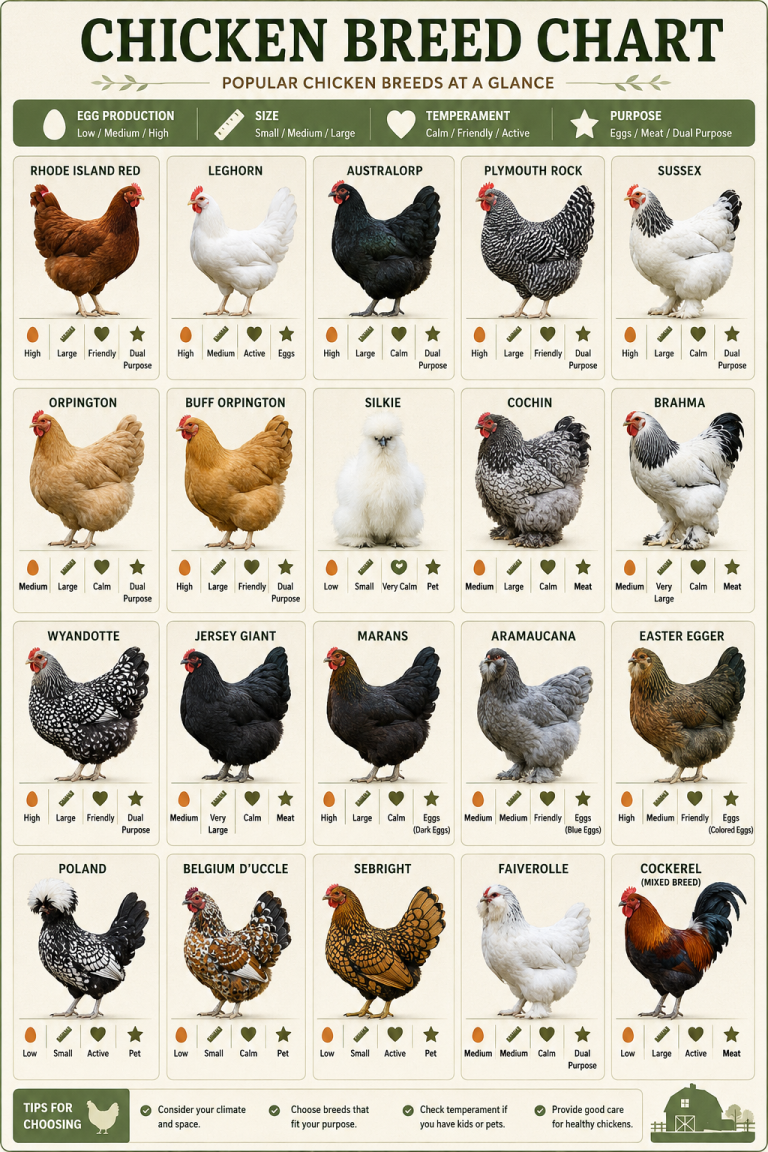
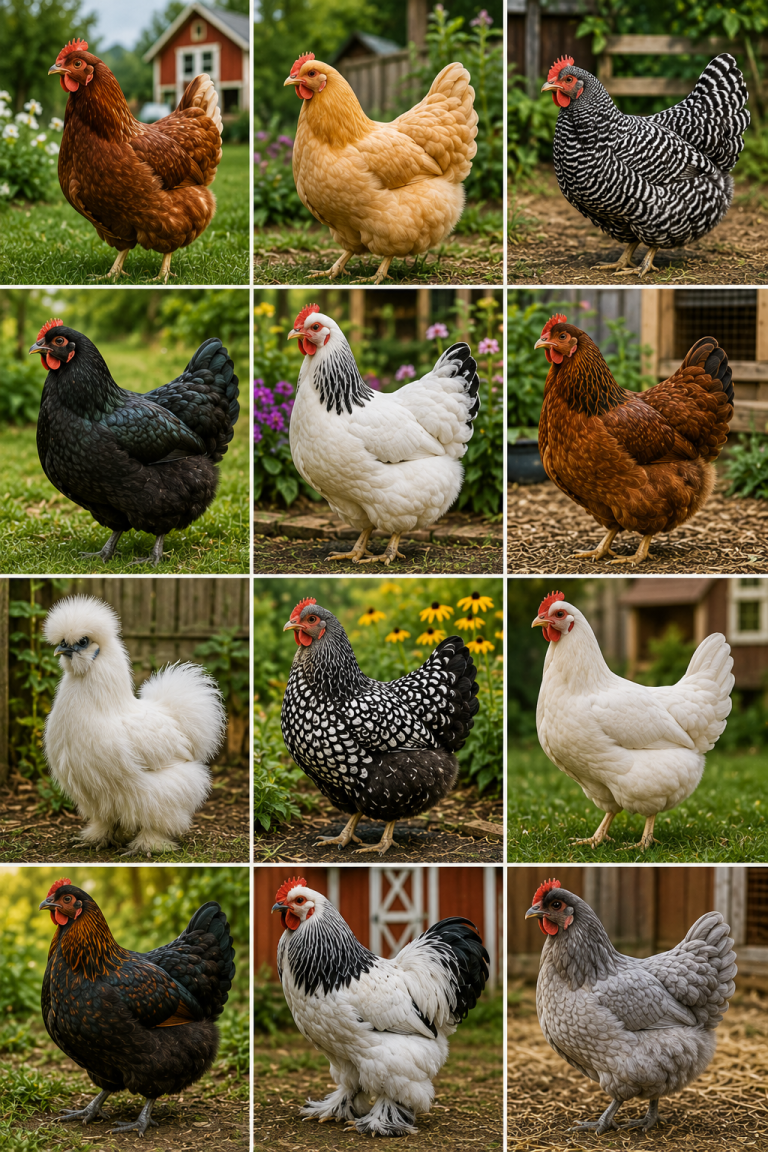
- Choose your breeds — see our full Chicken Breeds guide
- Plan your coop and run before you get the birds
- Arrange a feed supply source
- Find a poultry veterinarian before you need one
Getting Your First Chickens
Chicks vs Started Pullets vs Laying Hens
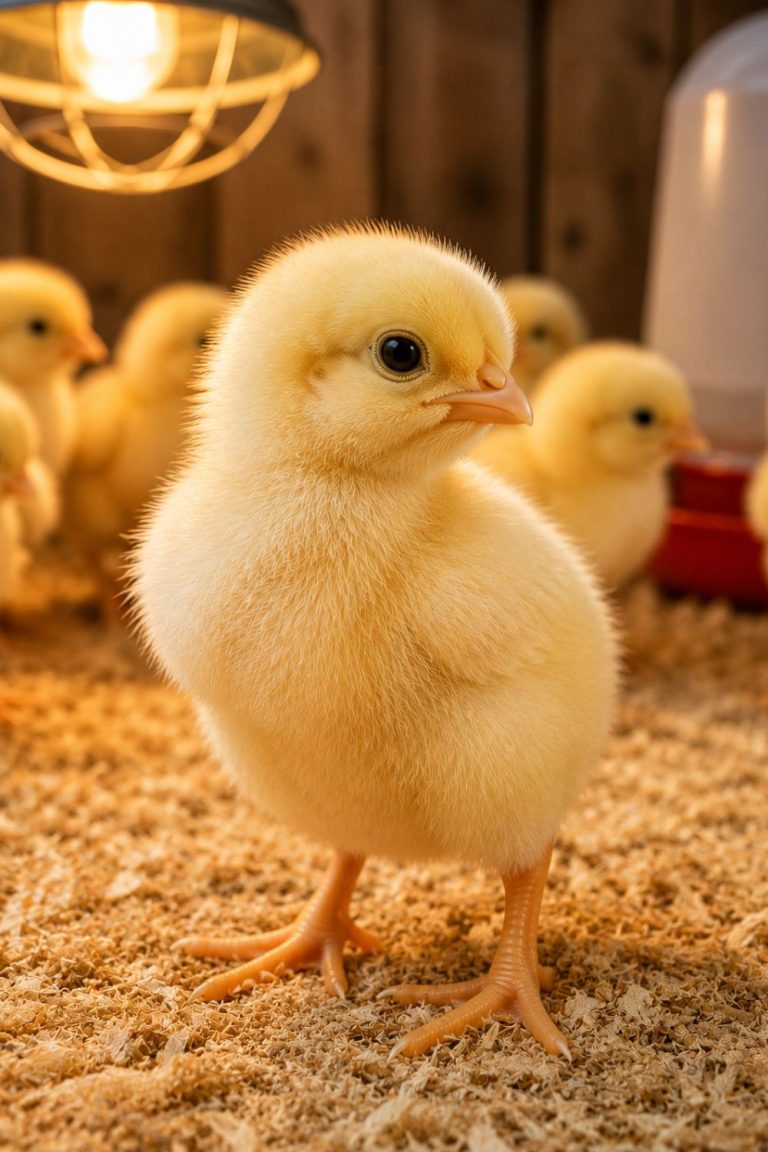
Baby chicks require a heated brooder for 6 to 8 weeks and take 5 to 6 months to start laying. Started pullets are 8 to 16 weeks old — past the brooder stage but not yet laying. Laying hens are 18 to 24 weeks old and already productive. For beginners, started pullets are the best balance of cost and convenience.
Where to Buy
Local feed stores stock chicks seasonally in the spring. Hatcheries ship day-old chicks by mail. Local breeders and farms sell started pullets and hens. Check social media groups and Craigslist for local flock rehoming.
Essential Equipment Checklist
| Equipment | Purpose | Our Recommendation |
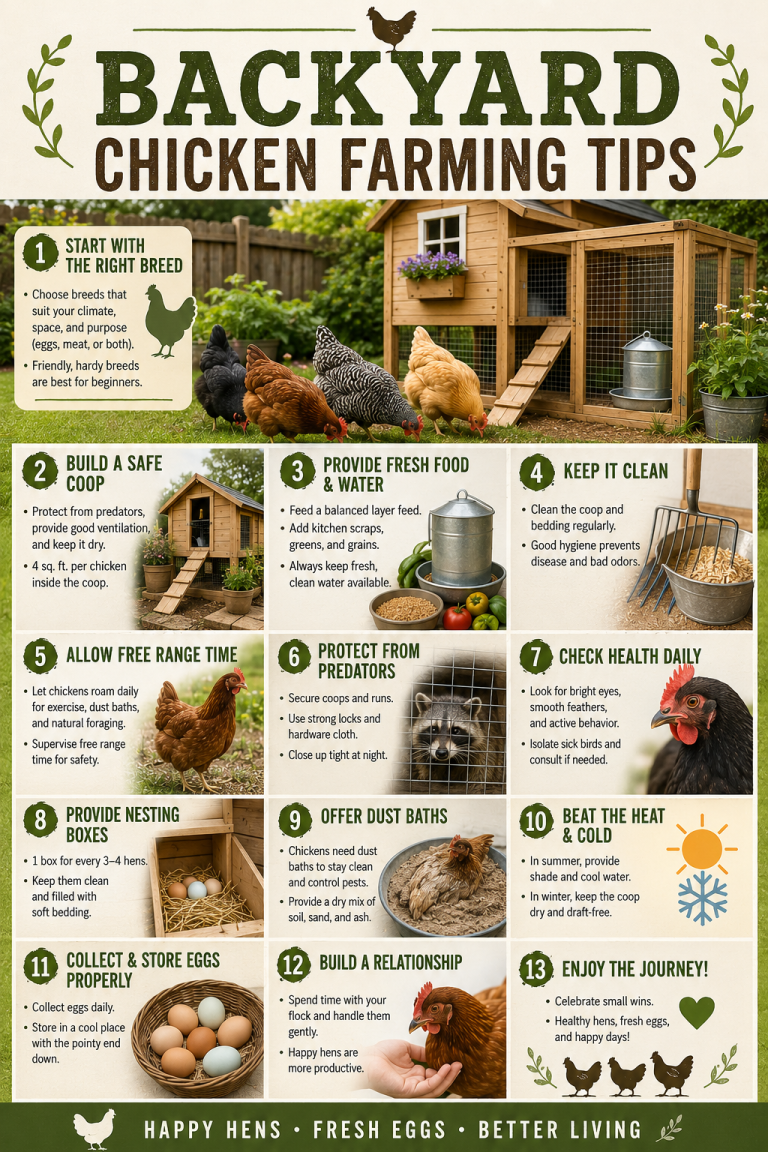
| Coop and run | Safe housing and outdoor space | Build or buy — 4 sq ft per hen inside |
| Automatic coop door | Sunrise/sunset door operation | See our auto door review |
| Feeder | Consistent feed access | 20 lb feeder for 6+ hens |
| Waterer | Clean water supply | 5-gallon nipple waterer |
| Nesting boxes | Egg-laying space | 1 box per 3 to 4 hens |
| Hardware cloth | Predator proofing | Half-inch welded mesh on all openings |
| First aid kit | Health emergencies | Pre-assembled poultry kit |
| Feed | Complete nutrition | Crumble or pellet for age group |
Feeding Your Chickens
What to Feed
Provide a complete commercial layer pellet or crumble as the primary feed — at least 90% of their diet. This ensures complete nutrition for egg production. Supplement with kitchen scraps, garden trimmings, and occasional treats.
Foods to Avoid
- Avocado — toxic
- Chocolate — toxic
- Raw or dried beans — toxic
- Rhubarb leaves — toxic
- Onions in large amounts — can taint egg flavor
- Anything moldy
Egg Production Basics
Standard laying breeds produce 4 to 6 eggs per week in peak laying season. Egg production is triggered by light — hens need 14 to 16 hours of light per day for consistent laying. In winter, a solar coop light maintains production.
- Solar coop light for winter production
Basic Health Care
Healthy chickens are active, have bright eyes, eat and drink normally, and have smooth, complete plumage. Watch for:
- Lethargy or inactivity — the first sign of many illnesses
- Respiratory sounds — wheezing or rattling indicate a respiratory infection
- Changes in droppings — green, black, or bloody droppings signal health issues
- Feather loss outside of moulting season — check for lice or mite infestation
Keep a first aid kit stocked and know your nearest poultry vet before you need one.
Frequently Asked Questions
How many chickens should a beginner start with?
Four to six hens is the ideal starter flock. Enough to provide a meaningful number of eggs daily while being manageable for a first-time keeper.
How long do backyard chickens live?
Most laying breeds live 5 to 10 years. Egg production peaks in the first 2 years and declines gradually thereafter.
How much does it cost to keep backyard chickens?
Rough estimates: $200 to $600 for initial setup (coop, equipment), $20 to $40 per month in feed for 6 hens, plus occasional vet costs. Most keepers find that the fresh eggs partially offset the feed cost.